

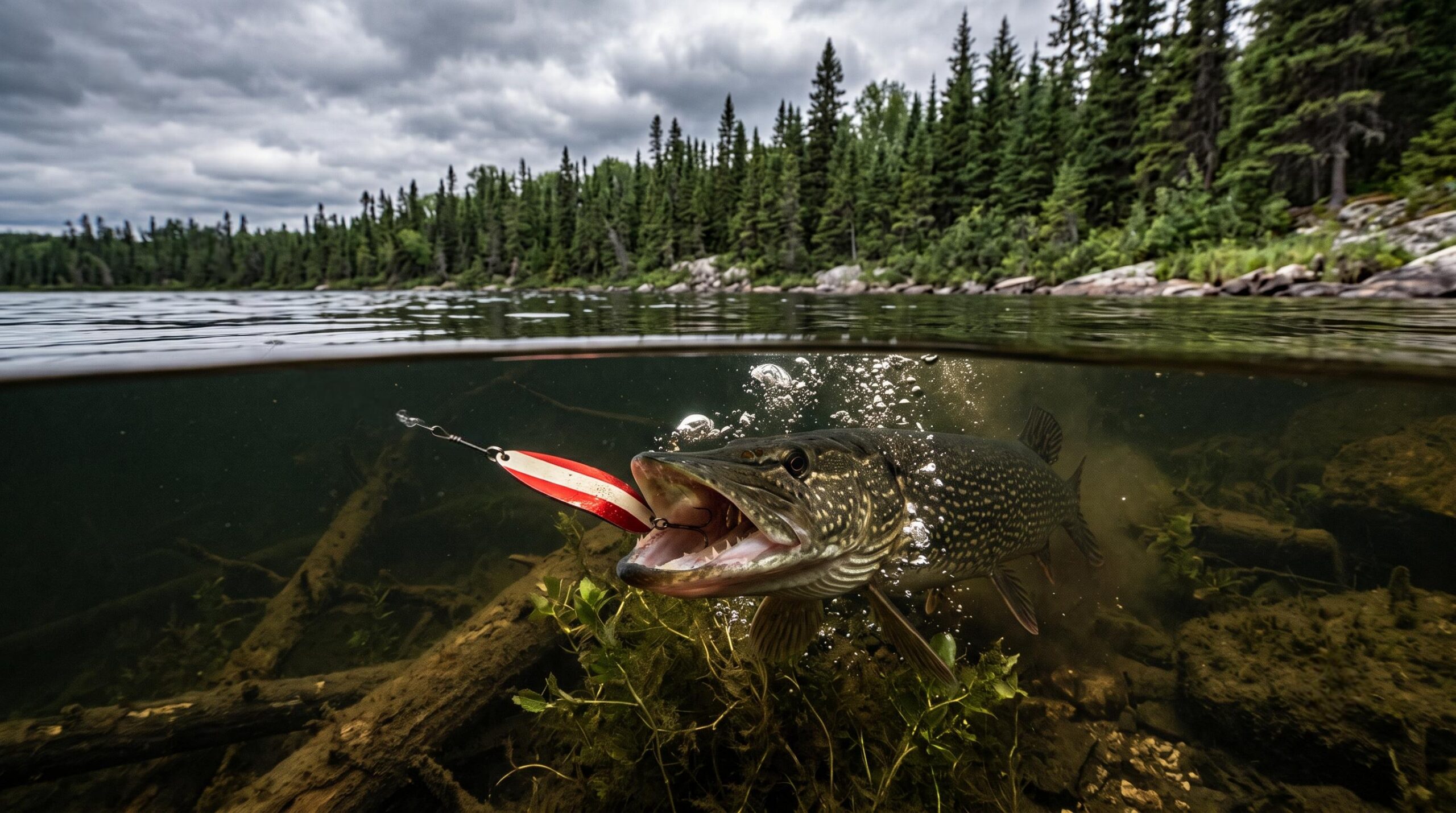
Why do we travel so far for a fish? It is a question I ask myself every time I board a float plane heading north—leaving behind the sterile, hyper-connected world for a cabin that smells faintly of woodsmoke and damp wool. Thomas McGuane wrote that angling is a way of touching the wild (a lovely, if understated, sentiment). Well, there is nothing quite as wild as a Northern Pike in its true element. These are apex ambush predators, creatures of sudden, spectacular violence that thrive in remote, cold-water lakes utterly untouched by human vanity.
The average pike you pull from a pressured, drive-to lake might weigh five to ten pounds. That is a fine fish, naturally, but it is not a revelation. In the pristine, high-yield system of the Cobham River, the mathematics shift entirely—the waters here are specifically primed to produce monster trophy pike. They wait in the dark water like loaded springs (a terrifying and gorgeous thing to witness), striking with a ferocity that will test every knot you have tied.
Seasonal Pike Patterns: How to Target Monsters Year-Round
Spring: Spawning in the Shallows
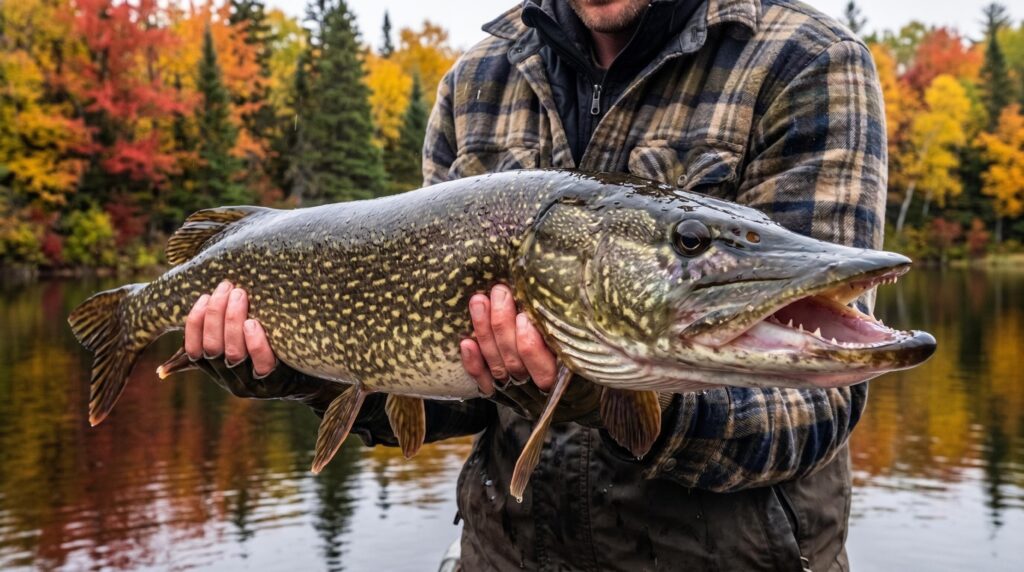
Nature, of course, dictates the terms of engagement (and she rarely consults our schedules). As the ice finally surrenders, warming spring waters draw these giants out of the dark and into the shallow bays and inlets. This is a tremendous time to be on the water—the pike are staging near weedy drop-offs to spawn, shedding their winter lethargy for pure biological imperative. You will find them sunning themselves in three feet of water, offering an intimate, almost vulnerable display before the feeding aggression truly begins.
Summer: Deep-Water Retreats & The Golden Hour Advantage
Summer changes the physical geometry of the lake. Pike despise warm water, retreating to the deep, cool basins as the July sun bakes the surface (a highly practical move, if you think about it). This behavioral shift is exactly where the Cobham Advantage becomes a rather elegant solution to a very common outfitter problem. Most fly-out lodges operate on strict banker’s hours—you are frustratingly grounded just when the fish are finally waking up.
At Cobham, you are staying at a dock-start lodge, meaning you dictate the terms of your day. During the heat of summer, large pike slide back into the shallow weeds to feed strictly around sunrise and sunset (the absolute best time to cast a line). Because you are not tethered to a pilot's flight log, you can hunt these active, aggressive fish during the dusk golden hour. It is a special quiet on the water then—the wind dying down, the surface turning to glass—right before a heavy strike shatters the peace.
Fall: Aggressive Pre-Winter Feeding
There is a distinct, beautiful melancholy to the autumn woods, but beneath the surface of the lake, there is only panic. Dropping temperatures signal the coming freeze, triggering an intensely aggressive, opportunistic feeding window that every angler dreams of hitting perfectly. The big fish return to the weed edges and structural drop-offs—gorging themselves on anything that moves to survive the impending ice. Catching a heavy fall pike (fattened and thick-shouldered for the long winter) is a stunning reminder of exactly why we brave the bitter rain.
The Ultimate Tackle Guide for Manitoba Pike
I have seen grown men weep over lost fish simply because they trusted cheap terminal tackle (a heartbreaking, entirely avoidable tragedy). You cannot negotiate with a 40-inch pike once it decides to run for the timber. You need practical, infallible gear, stripped of whatever shiny gimmicks the modern internet tries to sell you. Here is the secret to a proper, battle-tested Manitoba setup—pack these and nothing more:
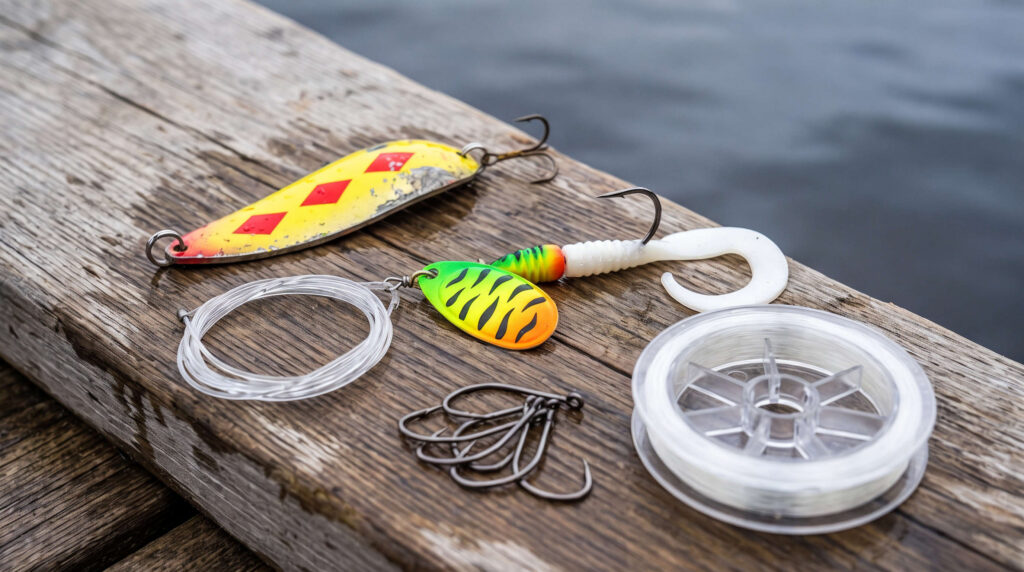
- Classic Spoons: Pack 2½ to 3-inch spoons in the essential, time-honored Canadian colors—Five of Diamonds, Red & White, and Fire Tiger.
- Dressed Spinners: A size 5 Mepps spinner is a tremendous search bait (especially when you add a 3-inch white curly-tail grub to the hook for spectacular, undulating action).
- Single Hooks: Do the fish and your own hands a favor by swapping out factory trebles for single hooks. It is an elegant solution that ensures fast, safe catch-and-release without sacrificing hookup ratios.
- Rods and Reels: Bring a 7 to 8-foot, medium-heavy spinning or baitcasting rod. Pair it with a reel housing a reliable 18 lb drag system—you will need every ounce of that stopping power.
- Line Options: Spool up with 30 lb braid for ripping through heavy summer cabbage. If you prefer trolling the deep basins, 15 lb monofilament is the practical choice.
- Bite Protection: A mature pike’s jaw is lined with row upon row of razor-sharp teeth. Tying on an 18-inch (46 cm) fluorocarbon leader rated at 60 to 80 lbs is absolutely non-negotiable.