

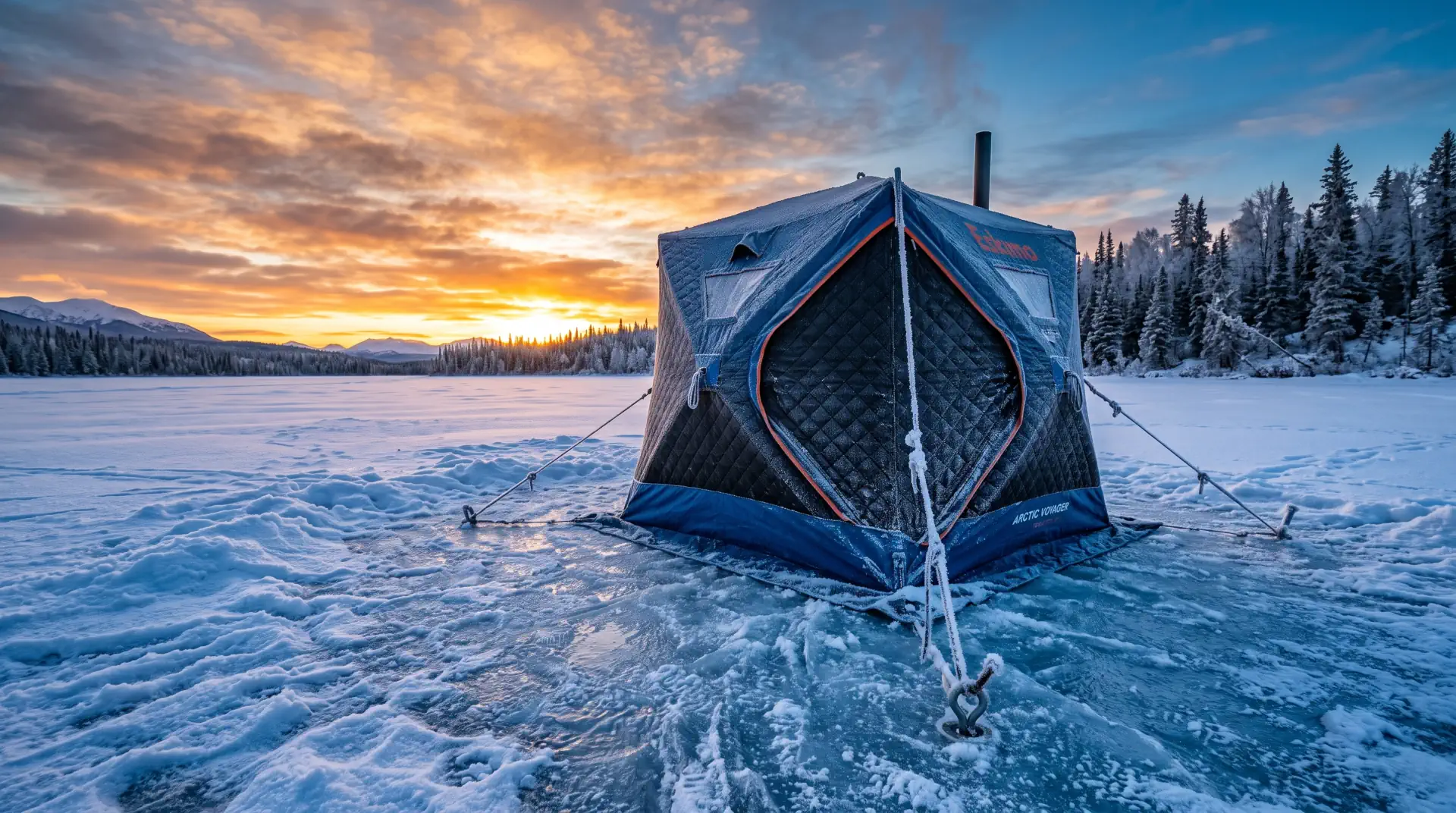
Mastering the Sub-Zero Canvas: Hubs vs. Flip-Overs
Dragging cheap gear across four miles of wind-scoured lake ice in sub-zero weather will teach you an unforgiving lesson in thermal physics. Choosing the right shelter isn't just about picking a tent—it's about matching your architectural setup to your target species, mobility requirements, and wind tolerance.
This interactive guide translates deep northern wilderness experience into actionable data. Use the matchmaker below to diagnose your exact shelter needs, evaluate thermal denier ratings, explore high-wind anchoring protocols, and compare top guide-tested models.
Shelter Matchmaker Tool
Select your exact trip parameters below to generate an immediate tactical recommendation for your hardwater setup.
Sled-Mounted Flip-Over (2-Person Full Thermal)
For active two-person run-and-gun angling in cold conditions, a thermal flip-over attached to an indestructible rotomolded sled is your ultimate weapon. Pop the canopy forward over your head in 15 seconds without unhooking from the machine.
Fabric Denier: Surviving Sub-Zero Blizzards
Cheap 300-denier single-skin shelters flap violently in 25-knot gales and hemorrhage expensive propane heat. Premium 600D to 1200D quilted thermal skins sandwich spun poly-fill insulation between tightly woven shells, blocking thermal transfer and preventing indoor "condensation rain."
Thermal Efficiency vs. Pack Weight
Field BenchmarkTap bars to compare heat retention % and pack weight.
300D Non-Insulated
Featherlight for hand towing, but functions like a windbreaker. Burns propane at double speed and drips ceiling condensation onto your neck.
600D Full-Thermal (Sweet Spot)
The gold-standard baseline for serious northern anglers. Ideal balance of windproofing, tear-resistance against sharp ice augers, and drag weight.
900D - 1200D Quilted Monster
Built like an Arctic survival bunker. Shrugs off sub-zero blizzards and extreme sharp pressure ridges, but requires a snowmobile or ATV to haul long distances.
High-Wind Anchoring Tactics
Ever watch a $600 hub shelter tumble across a frozen bay like an 80-pound nylon tumbleweed? Follow our 5-step guide-proven anchoring sequence to lock down your shelter in 35-knot winds.
Pin the Windward Corner Skirt First
Unload your shelter bag onto the ice facing directly into the windward gale. Before expanding a single wall hub, drive a self-tapping steel ice anchor directly through the reinforced windward corner skirt grommet. Lock this corner down. The shelter can no longer blow away across the bay.
Shelter Spec Database & Matrix
Filter and compare top hub and flip-over shelters based on weight, fishable area, and thermal construction.
| Shelter Model | Architecture | Fabric Rating | Fishable Area | Weight | Key Tactical Strength |
|---|
Blackout vs. Gray Canvas
Interior wall color dictates how you spot predator fish. Blackout darkroom coatings kill overhead light glare, allowing you to peer 12 feet down clear holes to sight-fish pike along cabbage weedlines.
Light-reflecting gray interiors bounce ambient lantern light, reducing battery drain during twilight walleye runs.
Sled Tubs & Hyfax Runner Bars
Thin plastic sled tubs shatter when towed over jagged pressure ridges at 20 mph. Insist on thick rotomolded polyethylene hulls.
Frequently Asked Field Questions
Direct answers to common equipment and safety questions encountered on sub-zero waters.