

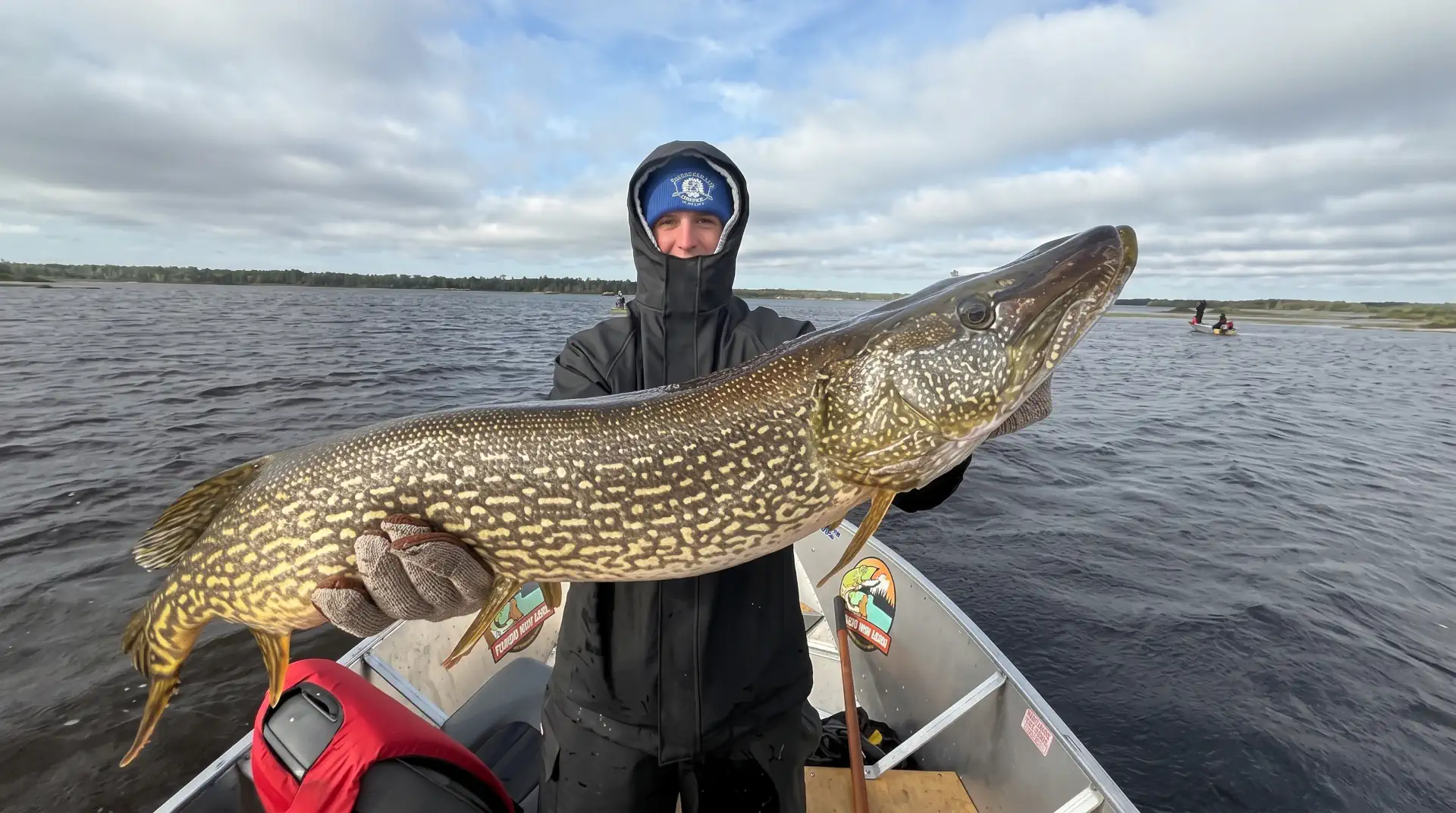
Spring Northern Pike Fishing: Heat Traps, Timing & Presentation
Master early-season pike tactics with real-time temperature tracking, precise habitat positioning, heavy tackle configurations, and proven cold-water retrieve cadences.
Quick Answer: Spring Pike Tactics Summary
Successful spring northern pike fishing depends on targeting shallow, south-facing bays where dark mud bottoms trap mid-day solar radiation. Concentrate your efforts between 11:00 AM and 3:00 PM as water temperatures climb toward 48°F–52°F. Work slow-moving suspending jerkbaits, swimbaits, and metallic spoons with extended 5-to-10-second pauses using 50–65 lb braided line and heavy wire leaders.
Forget Early Mornings: The Mid-Day Heat Window
Early morning casting in cold fog wastes arm strength. Post-ice water sits at a sluggish 35°F–38°F. As afternoon solar radiation cooks the shallow mud flats, a four-degree jump triggers aggressive feeding frenzies. Tap below to explore how water temperature dictates pike behavior throughout the day.
Select Water Temp Phase:
Hourly Solar Warming vs. Strike Probability
Finding Real Heat Traps & Trophy Female Positioning
Not all shallow water holds trophy fish. Small aggressive males throng skinny water, while 40-inch+ females position along adjacent transition drop-offs. Tap a zone below to reveal targeting details.
Shallow South Bay
Dark muck bottom absorbing solar rays. Warmest water in the lake system.
Tributary / Creek Inflow
Delivers oxygenated, warm spring runoff that concentrates yellow perch and baitfish.
Outer Drop-Off & Ledge
First breakline adjacent to spawning flats where giant post-spawn females stage.
Cadence Kills Sluggish Monsters
In 48°F water, speed kills your chances. Pike rarely chase high-speed burns. You must pause suspending jerkbaits and count to eight. Test the simulator below to see how pause duration spikes strike probability.
Interactive Retrieve Simulator
Cast your lure, twitch twice, then tap "Twitch & Pause Lure" to hold it motionless in the water column.
Heavy Hardware & Conservation Tools
When a 20-pound predator crushes a lure in flooded brush, you need tackle built for heavy cover. Review our tested gear builds and required conservation tools.
Heavy Action Baitcasting
7'0" to 7'6" Heavy power with stiff backbone to drive thick barbless hooks into bony jaws and wrench fish out of cover.
50–65 lb Braided Line
Zero-stretch braid slices through dead vegetation and delivers instant hook-setting force across long casts.
80 lb Fluorocarbon / Titanium
Resists razor-sharp pike teeth. Fluorocarbon provides stealth in clear water; titanium resists kinking during hard fights.
Neutral-Buoyancy Jerkbaits
Suspends perfectly in place during long pauses. Rattle chambers and metallic flash drive following pike crazy.
Heavy Metallic Spoons
Red-and-white or brass spoons. Flutter slowly on a slack line during pauses over emerging cabbage beds.
Paddle-Tail Swimbaits
Unweighted or light belly-weighted swimbaits rolled slowly across mud transitions produce heavy reaction strikes.
Rubberized Landing Nets
Protects the fish's protective slime coat and prevents treble hooks from tangling during land-and-release.
Jaw Spreaders & Pliers
Essential long-nosed pliers and spreaders safely keep toothy jaws open while backing out barbless hooks.
Heavy Wire Cutters
Allows immediate hook-hook cutting if a lure gets pinned near sensitive gill arches or deep in the throat.
Common Questions About Spring Northern Pike Fishing
Quickly access authoritative answers regarding early-season pike behavior, gear requirements, and trophy location.