

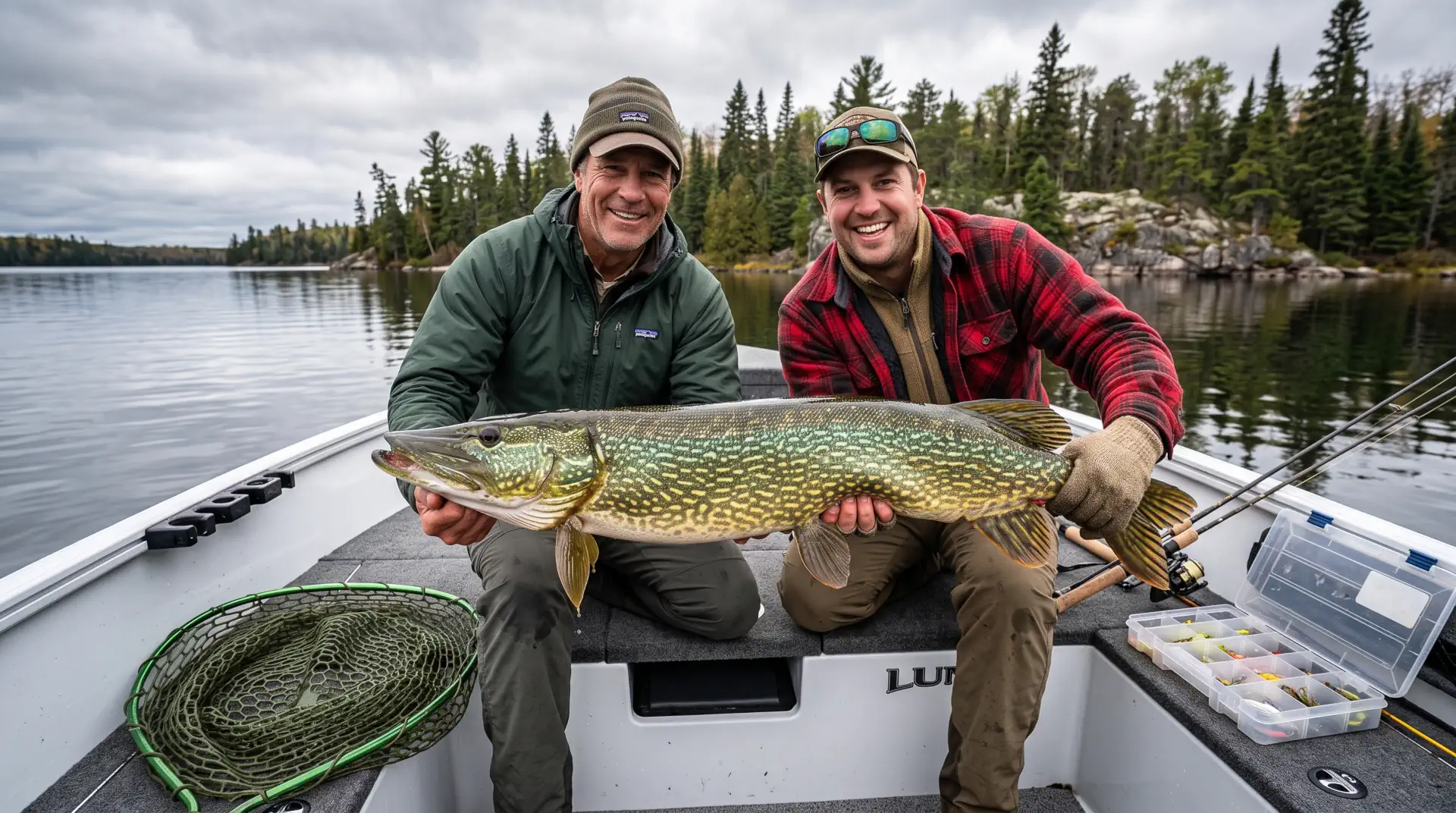
How to Catch Northern Pike in Heavy Weeds
Learn how to read oxygen-rich cabbage beds, eliminate line snags with specialized weedless rigs, and trigger violent reaction strikes from trophy predators.
Quick Answer: Catching Northern Pike in Weeds
To catch northern pike in weeds, target lush green cabbage and coontail beds in 6 to 14 feet of water rather than dying brown vegetation. Cast weedless spoons, heavy spinnerbaits, or texposed swimbaits into open interior pockets. Snap the rod tip sharply when contacting grass to trigger vicious ambush reaction strikes.
The Oxygen Trap: Not All Slop Is Created Equal
This section analyzes underwater vegetation dynamics. Before making a single cast, anglers must distinguish between oxygen-producing living foliage and oxygen-depleting decaying mulch. Pike are apex predators that demand high oxygen levels to sustain burst speed attacks.
Green Broadleaf Cabbage
Upright stalks in 8–14 ft water adjacent to sharp drop-offs.
Green Coontail / Milfoil
Dense brushy clumps providing tight cover for panfish and perch.
Decaying Brown Mulch
Rotting late-summer vegetation consuming dissolved oxygen.
Weedless Armory: Interactive Setup Calculator
Use this interactive gear builder to match your immediate field conditions with the exact rod backbone, braided line rating, terminal leader, and weedless lure modification required to winch giant pike out of thick cover without fouling.
1. Select Water Conditions
2. Recommended Terminal Blueprint
Prime Cabbage RigThe classic mid-depth (7-12ft) cabbage setup. Heavy 1 oz brass/chrome spoon cuts deep, stays down near stem roots, and rips clean with a hard rod snap.
Rip the Grass: The Snap Retrieve Trigger Simulator
Pike rarely chase a lazy lure swimming predictably over weed tops. They are ambush killers sparked into an uncontrolled frenzy by panic. Click through the 4-phase retrieve cycle below to simulate how snapping the rod tip converts weed contact into violent strikes.
Casting Past the Cabbage Flat
Cast your heavy weedless spoon or swimbait beyond the visible cabbage bed. Begin a steady, brisk retrieve directly toward the outer foliage line keeping your rod tip angled down at 45 degrees.
Tactical Data & Presentation Science
Explore empirical data compiled from guide logs and field research. These charts illustrate why single weedguard hooks outperform stock trebles in dense cover, and how dissolved oxygen shifts pike depth across summer.
Lure Performance in Dense Vegetation
Comparing snag percentage against reaction strike trigger rates.
*Single Siwash and Texposed Swimbaits provide 80%+ lower weed fouling while maintaining high hookups.
Pike Depth & Light Penetration Shifts
How midday sun drives trophy females into deep isolated coontail humps.
*Target shallow flats during low-light/windy chop; shift to 10-15ft cabbage humps under bright sun.
Wrenching Muscle & Safe Trophy Release
Hooking a 40-inch northern in thick cabbage is only half the battle. If a giant dives into root systems, line friction can tear hooks free. Follow this step-by-step extraction and unhooking checklist to protect both angler and fish.
Bone-Jarring Hookset
Bury the hook instantly with everything you have. Maintain upward rod pressure to lift her head above bottom weed stalks.
Rubber Net Capture
Guide her straight into an oversized knotless rubber mesh landing net. Never tangle fish in coarse nylon mesh that strips slime coat.
Belt Toolkit Extraction
Use long needle-nose pliers and jaw spreaders over the gunwale. Keep wet hands to preserve protective mucosal slime.
Horizontal Support
Never lift big pike vertically by the gills. Support her belly horizontally in the current until her tail kicks strong.