

All-Inclusive Canada Fishing Trips: Field Guide & Operational Specs
A raw, transparent breakdown of fly-in floatplane logistics, custom heavy-gauge aluminum skiffs, open-fire walleye shore lunches, and trophy pike ethics north of the 53rd parallel.
An all-inclusive Canada fishing trip provides remote wilderness angling where private floatplane transfers, professional guides, customized boat and motor packages, unlimited marine fuel, tackle, and daily meals—from hot breakfasts to open-fire shore lunches and multi-course dinners—are wrapped into a single, upfront American Plan rate.
What True Remote Wilderness Packages Actually Cover
Look, booking a bush trip north of the 53rd parallel is not like booking a beach resort in Mexico.
When you sign up for genuine all-inclusive Canada fishing trips, you are buying peace of mind in country so rugged that an oversight leaves you stranded on an isolated granite outcrop. A proper American Plan package handles every operational headache before you ever set foot on the dock.
Here is what your rate must cover:
- Private Floatplane Charter: Direct air transit from the staging base straight onto the river system, skipping bush roads entirely.
- Custom Boats and Fuel: Fully rigged skiffs paired with dependable four-stroke outboards and unlimited marine fuel burned across the week.
- Licensed Guide Service: Seasoned watermen who know every hidden reef, cabbage patch, and neck-down current seam.
- All-Inclusive Kitchen: Made-to-order hot lodge breakfasts, legendary midday shore lunches cooked over dry tamarack, and evening dining.
- Lodge Amenities: Daily cabin housekeeping, hot high-pressure showers, and complimentary gear dry-out rooms.
If a lodge charges you extra at checkout for gas cans, ice bags, or terminal tackle, pack your duffle.
You are at the wrong outfit.
Typical Expense Breakdown: All-Inclusive vs DIY Outfitter
7-Day TripInitial cheap quotes often disguise steep à la carte charges for bush fuel and staging flights.
Values based on standard 7-day fly-in wilderness operations.
True American Plan Standards
Before placing a deposit with any Canadian outfitter, ensure these line items are explicitly included in writing without back-end billing.
- ✔ Private Floatplane Airlift included
- ✔ 16.5' Welded Skiff & 25 HP Outboard
- ✔ Unlimited Marine Fuel & Motor Oil
- ✔ Daily Open-Fire Shore Lunch
- ✔ 80lb Braid Tackle & Graphite Rods
- ✔ Zero Hidden Surcharges at Checkout
Fly-In Flight Logistics and the 55-Pound Scale
Here is the thing about floatplanes: gravity does not negotiate.
Your journey starts with a commercial hop into Winnipeg, followed by a chartered staging run to the floatplane base. When that classic Cessna Caravan idles up to the dock, its Pratt & Whitney engine rattling the spruce needles on the bank, your duffle bags hit the scale.
Strict fifty-five-pound limit per angler. Every single pound matters.
Leave the hard suitcases and tackle trays full of lead weights at home when preparing your fly-in packing list. Quality outfits supply high-end baitcasting and spinning combos spooled with fresh eighty-pound braid alongside titanium leaders that hold up against rows of razor teeth.
Bring quality rain gear, a pair of warm layers, and your polarized sunglasses. The lodge takes care of the heavy metal.
Interactive Floatplane Weight Planner:
Cessna Caravan floatplanes operate under strict federal payload regulations. Excess weight compromises liftoff safety on short wilderness lake stretches. Use the live auditor below to calculate your pack before arriving at the dock.Live Fly-In Luggage Weight Auditor
Adjust each gear category to ensure you stay under the mandatory 55-pound payload threshold.
Pro Tip: Save 6 lbs by relying on lodge-supplied heavy graphite rods spooled with 80-lb braid.
The Watercraft: Heavy Aluminum Built for Shallow Boulders
You cannot run thin fiberglass hulls across jagged Precambrian Shield rock.
Out here, the river demands 16.5' welded flat bottom boats built from heavy-gauge aluminum. They draft exceptionally shallow to slip right over rocky shoals and navigate dark backwater sloughs where warm mud holds monster fish.
Every boat runs reliable 25-horsepower four-stroke motors. Quiet. Dependable. They start on the first pull when a storm kicks up on the main lake and you need to run ten miles back to base camp.
Outfitted with high-resolution Lowrance sonars to paint bottom contours, weedbed edges, and thermal breaks, paired with padded swivel pedestal seats, you spend ten straight hours casting without wrecking your lower back.
Fleet & Equipment Specifications: What To Expect
↔ Swipe horizontally to compare| Feature / Rigging Item | Cobham River Lodge Fleet | Standard Remote Outfitter Fleet |
|---|---|---|
| Boat Hull Construction | 16.5' Welded Flat Bottom Boats (Heavy-Gauge Aluminum) | 14–16 ft Thin Riveted Aluminum / Fiberglass |
| Outboard Propulsion | 25 HP Four-Stroke (Electric Start) | 15–20 HP Two-Stroke (Manual Pull) |
| Sonar & Navigation | Lowrance High-Res Sonar | None or Basic Black & White Flasher |
| Pedestal Seating | Padded 360° Swivel Pedestal Seats | Bare Metal Bench Seats |
| Marine Fuel Supply | Unlimited Marine Fuel Burned Included | Charged per gallon at checkout ($10+/gal) |
The Rhythm of the River: Sunrise to Starlight
The dock wakes up at 6:00 AM. Mist rolls off the dark river while the kitchen crew pours hot, black coffee strong enough to float a lead sinker. By seven, the outboards rumble to life, spitting cool river water as guides point bows toward the morning cabbage beds.
The morning is built for violent, high-speed runs. You throw heavy one-ounce brass spoons and oversized bucktails across weedlines, watching aggressive predators charge out of the shadows. When a forty-five-inch Northern slams a lure three feet from the gunwale, the water erupts like a detonated washing machine. Brace your knees against the gunwale. Keep that rod tip down.
By high noon, the boats gather on a sheltered granite point for the traditional Canadian shore lunch. Your guide cleans morning walleye right on a flat rock, rolls the firm white fillets in spiced cornmeal, and drops them into crackling lard over an open fire. Crisp, golden fish. Cold drinks. Hot beans and fried potatoes eaten off tin plates under the whispering pines.
That is why you travel north.
The afternoon belongs to deep rock saddles and current bottlenecks where fat walleyes stack up for easy limits before we head back to the lodge for ribeyes and fireside stories.
Interactive 24-Hour River Rhythm Timeline
Select an hour below to preview dock operations, tactics, and meal pacing.
Mist rolls off the dark river while the kitchen crew pours hot, black coffee strong enough to float a lead sinker. Anglers review weather updates and check tackle bags before stepping to the breakfast table.
Seasonal Angling Peak Activity (June – August)
Sub-Arctic Water TemperaturesObserve the shift from shallow dark bay warming (June trophy pike sight-fishing) to deep main-lake reef holding (July & August walleye stacking).
Handling Giants: Barbless Hooks and Clean Releases
A trophy fish in northern Canada took over twenty-five years to grow that long.
She survived savage winters, low-oxygen ice packs, and relentless territorial brawls. We do not toss these broodstock females on a hot aluminum deck to thrash off their slime coat, and we never lift a heavy fish vertically by her gill plates.
That kills them.
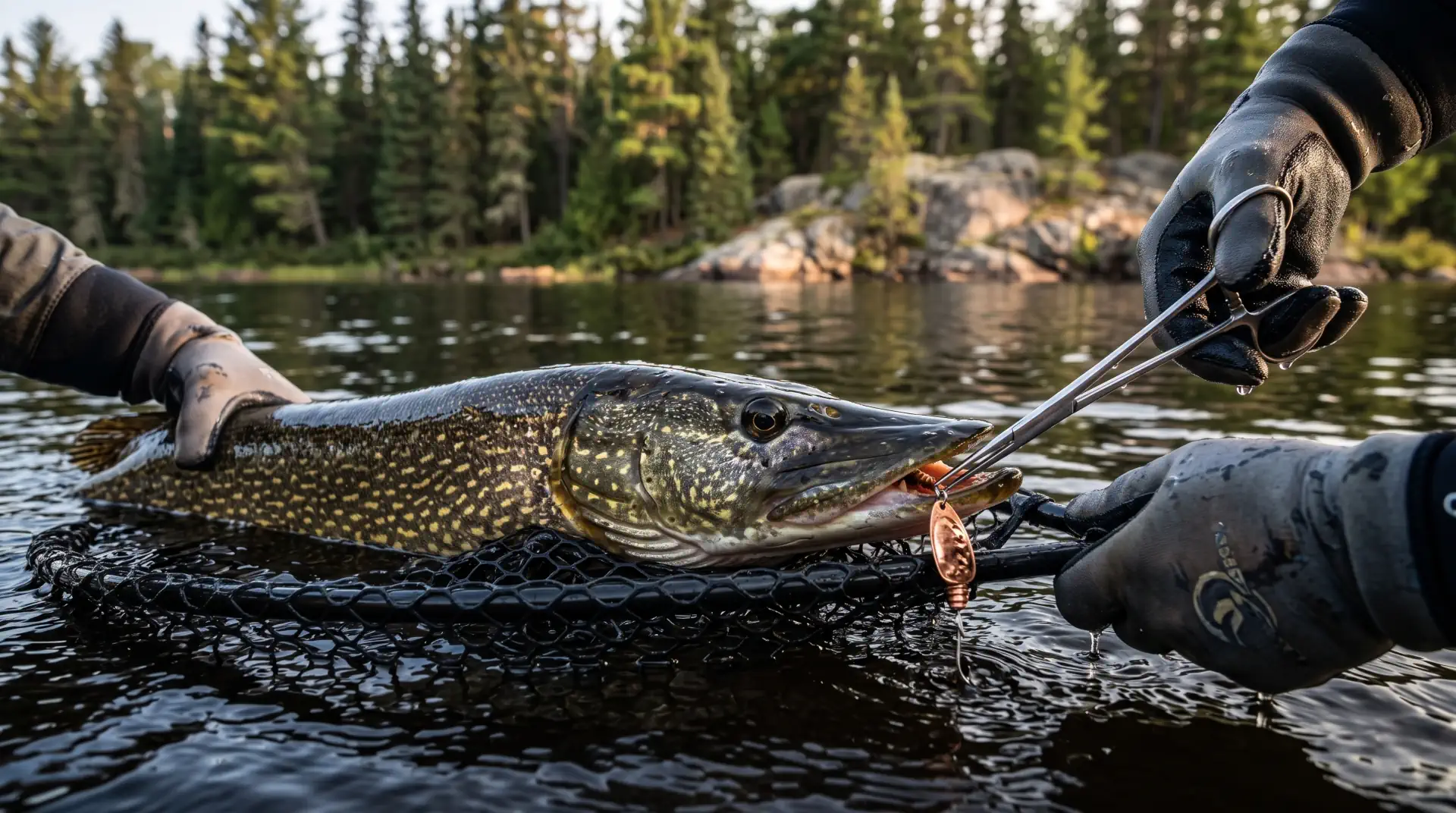
When targeting monster pike in the shallows, every hook in your box must have its barbs crushed flat with heavy pliers. Guides bring fish boatside into rubberized knotless cradles, back the hook out cleanly with long-nosed surgical forceps, and support their weight horizontally in the water.
Hold her by the tail until she kicks water into your face and powers back down into the depths. That is real conservation.
Common Questions About All-Inclusive Canada Fishing Trips
June delivers violent shallow-water action as pike bask in newly warmed bays, while July and August offer dependable weather, dense cabbage weedline casting, and deep-structure walleye schools stacked tight on main-lake reefs.
No. Premier operations provide heavy-action rods, durable reels, steel leaders, and proven lures. Guests only need to bring personal rain gear, polarized glasses, and specialized favorite lures they love throwing.
Extremely strict. Remote bush planes operate under severe payload safety regulations; packs are weighed before boarding, typically holding guests to a firm 55 pounds total, including rod tubes.
In most cases, provincial conservation angling licenses and barbless-hook endorsements must be purchased online prior to your arrival in Winnipeg, though outfitters will provide the exact regulatory links.