

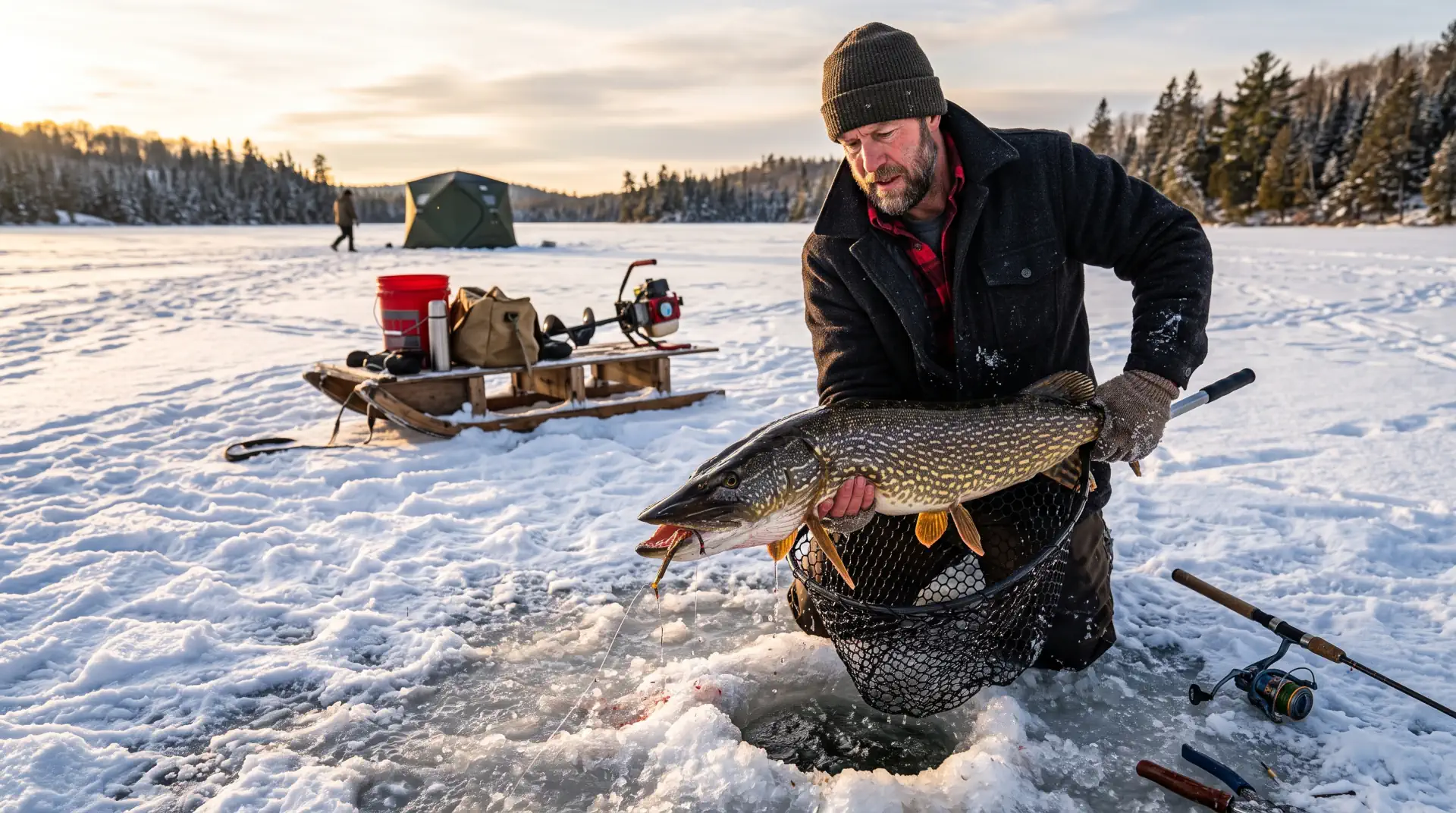
How to Catch Trophy Pike in Winter
Quick Answer: Pike fishing in winter requires targeting green, oxygen-producing weed beds and steep drop-offs adjacent to deep 4°C basins. Because cold water slows a pike’s metabolism, suspend large dead baits or heavy flutter spoons one to three feet above cover, slowing your presentation to provoke low-energy, upward ambush strikes.
The Cold Water Truth: Metabolic Economics
When subzero air settles over northern waters, water beneath the ice caps out at 4°C at bottom sediment. That changes everything.
Digesting a single perch can take two full weeks in freezing water. Because of that sluggish metabolic pace, a monster pike refuses to burn 300 calories chasing a panicked minnow just to gain 200 back.
The energy math must balance. If your bait hauls across the water column like an express train, she lets it slide right past. You must bring the meal directly to her nose, let it hang in the strike zone, and give her every reason to attack without spending precious caloric capital.
The Subzero Energy Balance Sheet
Net Result: Pike strike exclusively when net caloric ROI is positive. Dead-sticking wins the game.
Metabolic Strike Forecaster
Perfect subzero presentation. Bait hangs stationary in predator's upward eye cone. Minimum chase energy needed.
Subzero Water Column & Oxygen Stratification
Early Winter: Weedline Ambush
Living coontail and broadleaf cabbage beds continue releasing oxygen into the 8 to 14-foot shallows. Trophy pike patrol the weed perimeter like wolves along a timberline.
Keep your quick-strike dead bait suspended 24 inches directly above the weed crowns. Never drop bait into the weeds where detritus hides the silhouette.
Hard-Water Hardware & Proven Winter Iron
Trophy winter pike will expose every microscopic flaw in your gear. Hooking a 40-inch fish in tight quarters under 30 inches of ice requires specialized, heavy-duty tackle built to endure subzero punishment.
38" - 42" Heavy Solid Carbon
Cushions brutal headshakes directly under the ice rim while supplying the stiff backbone needed to drive hooks into bony upper palates.
Benchmark: Clam Meat Stick / St. Croix Custom Ice Predator40 - 50 lb Coated Ice Braid
Hydrophobic tight-weave construction sheds water immediately, preventing ice buildup on the spool and avoiding fray against sharp hole margins.
Benchmark: Sufix 832 Advanced Ice Braid (Hydrophobic)40 lb Wire or 1.0mm Fluoro
Supple coated multi-strand wire guarantees zero shear against 700+ needle-sharp teeth. Never gamble with light monofilament.
Benchmark: AFW Surflon Micro Supreme or 1.05mm SeaguarInteractive Hard-Water Lure Arsenal
Williams Whitefish C70
The patented stabilizing ridge prevents spinning while producing a wide, side-to-side sweeping glide on slack-line drops. Genuine silver and brass mirror finishes reflect ambient daylight even under thirty inches of snow-covered ice.
- Rip the spoon 36 inches upward with a brisk upward sweep to send lateral flash 60 feet.
- Free-fall on slack line to let the cupped blank flutter horizontally.
- Dead-stick stationary for 8 full seconds when a mark rises on sonar.
- Impart a 1/4-turn reel handle micro-hop to trigger the upward commitment strike.
Freezing Air and the Ethics of Subzero Handling
Subzero air destroys fish tissue faster than heat ever could. At -15°C, a pike’s delicate gill lamellae freeze and rupture within thirty seconds of air exposure. That turns what looks like a successful release into a delayed mortality statistic three days later.
If you want to preserve these apex genetics, keep the fish in the water while you grab your long-nose pliers and release tools.
In-Hole Unhooking
Keep the fish submerged inside the 10-inch ice auger cylinder. Back the hooks out without exposing the gills to -20°C ambient breeze.
Horizontal Support Only
Never hang a heavy winter female by the jaw. Her internal organs and spine are not built for vertical gravity outside of buoyant water.