

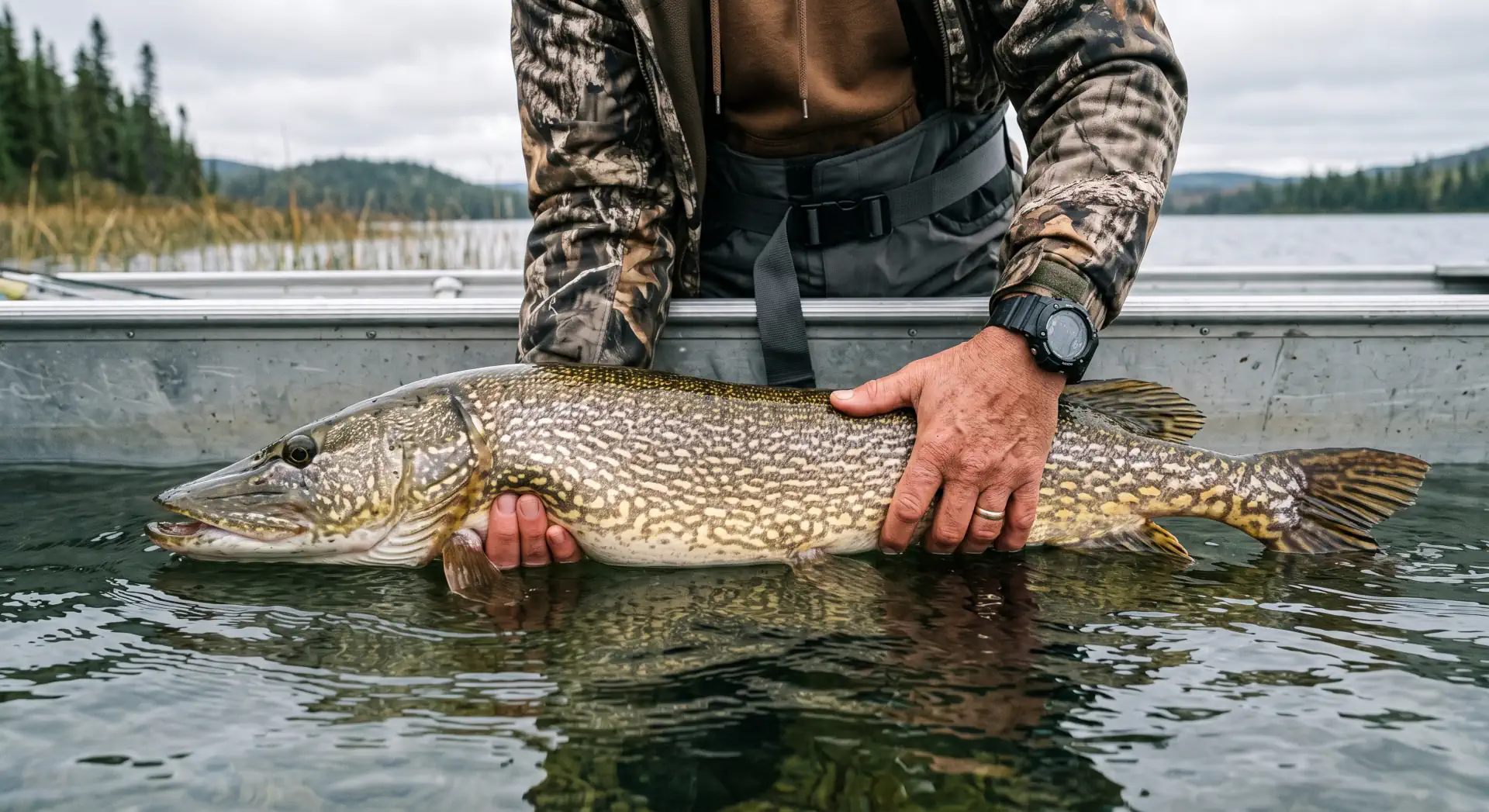
Quick Answer
For monster Northern Pike, the best all-around reel is a high-capacity baitcaster with a minimum of 20 pounds of drag and a lower gear ratio (around 5.4:1 to 6.3:1). A baitcaster provides the necessary winching power to rip 45-inch fish out of heavy cabbage and handles 1-ounce-plus lures without stripping gears.
If you are a beginner, a 3000 or 4000-size spinning reel spooled with 40-pound braid is a capable alternative that prevents frustrating backlashes.
The Reality of Rigging for Water Wolves
You don’t bring a knife to a gunfight, and you don’t bring a flimsy panfish reel to a Northern Pike ambush.
Up here, the water is cold, the rocks are sharp, and the fish are built like torpedoes with teeth. When a heavy female Pike decides she wants your lure, it is not a polite strike—it is a violent, rod-snapping collision. You need gear that can take a beating. Day in, day out. We grease the bearings, launch in the dark before the wind kicks up, and tie an 80-pound wire leader directly to heavy braided line.
"When a forty-inch Northern slams a 1-ounce brass spoon in three feet of thick milfoil, you don't need fine art—you need a stiff backbone in the rod and a reel built like a tractor..."
Let’s be real. The debate between spinning reels and baitcasters usually comes down to ego or fear of the "birds nest." We sit side-by-side with anglers every day, watching what holds up and what shatters under the pressure of a 20-pound fish. The right tool depends on your comfort level, the weight of the hardware you are throwing, and how much time you want to spend untangling braid versus actually fishing.
Choose Your Weapon
Analyze the pros, cons, and top picks for both spinning and baitcasting setups.
The Reliable Workhorse
Spinning reels are the great equalizer. They are forgiving. They cast light baits into a headwind without turning your spool into a chaotic knot of regret. If you are just getting comfortable with heavy tackle, a spinning reel is where you start. Period.
A size 3000 or 4000 spinning reel gives you enough spool capacity for thick braided line and enough drag to slow down a hard run.
The Fundamental Flaw
The line comes off the spool in coils, creating friction. This limits distance and accuracy with heavy, wind-resistant baits. Worse, standard spinning gears aren't always designed for the constant, grinding resistance of massive lures. A cheap spinning reel will fold under the pressure of a monster fish in thick weeds.
Our Go-To Spinning Options
The Entry-Level Tank: Shimano Sedona (4000)
Affordable, surprisingly smooth drag for the price point, and can take the abuse of a week-long fly-in trip.
The Mid-Range Champion: Daiwa BG 3000
Overbuilt gears and an aluminum body mean it won't flex when a big fish buries itself in the weeds.
The Elite Spinner: Shimano Stella FK
If you demand absolute perfection and have the budget, this reel offers unparalleled smoothness and drag consistency.
The Heavy Artillery
This is where the serious hardware lives. If you are hunting trophy Pike, a baitcaster is your primary weapon. Why? Control and raw power.
The spool sits parallel to the rod blank. The line comes straight off. You can feather the spool with your thumb, dropping a heavy swimbait precisely into a pocket of lily pads with zero splash. More importantly, a baitcaster is a winch. Packed with 65-pound braid, it gives you the torque to turn a 45-inch Pike's head away from thick cover.
Optimal Gear Ratio
Look for lower gear ratios (5.4:1 to 6.3:1). You don't want a high-speed reel; you want low-end grunt to physically drag the fish out of the cabbage. Drag output should be at least 20 lbs.
Our Go-To Baitcaster Options
The Musky/Pike Standard: Abu Garcia Ambassadeur C4
A classic round reel. It’s loud, heavy, holds a mile of braid, and will survive a nuclear blast.
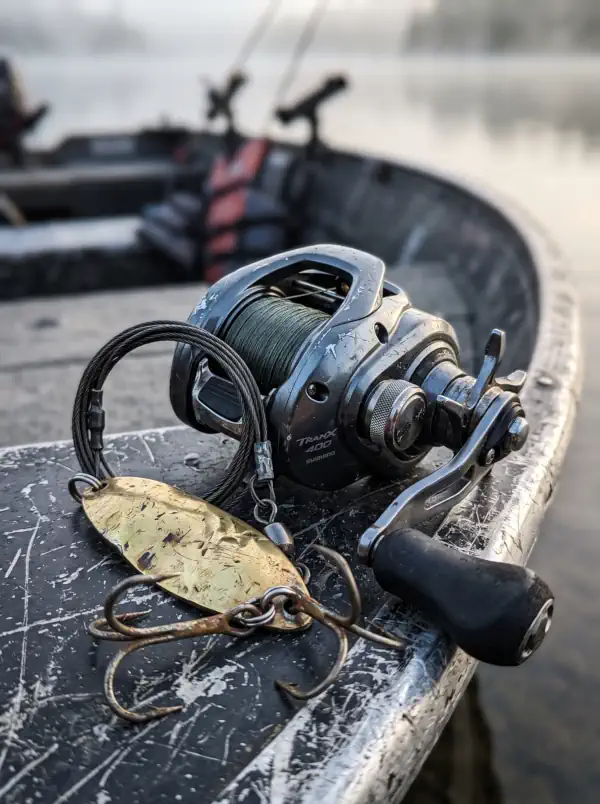
The Low-Profile Brawler: Shimano Tranx 300/400
The modern workhorse. Palms beautifully, casts a mile, and the drag is strong enough to stop a truck.
The Budget Beast: Daiwa Lexa WN
Excellent grip, solid construction, and enough power to handle heavy hardware without breaking the bank.
The Gear That Connects You
The reel is just the engine; the rest of the setup dictates if you actually land the fish.
Heavy Braid
Never rely on standard mono or fluorocarbon for the main line. You need 50 to 80-pound test braid. Braid has zero stretch, transferring all force directly to drive the hook point into a bony jaw.
Bite Leader
Always use a leader. Tie an 80-pound wire leader or 100-pound fluorocarbon leader directly to the braid. Those teeth will slice through standard line like a hot knife through butter.
Conservation
Crush the barbs on every treble hook. Keep long-nosed pliers handy. Unhook toothy females quickly in the net and hold horizontally in the water until they swim away strong.
Common Questions
A size 3000 or 4000 spinning reel is ideal. It provides enough spool capacity to hold heavy braided line (30-40lb) and offers a drag system robust enough to handle a large, aggressive fish without adding unnecessary weight to your rod.
No, you don't need one, but it is a significant advantage. Baitcasters offer superior winching power for heavy lures and better torque for pulling large fish out of heavy cover. However, a high-quality 4000-size spinning reel can still get the job done if you prefer to avoid backlashes.
Look for a lower gear ratio, ideally between 5.4:1 and 6.3:1. Pike fishing often involves pulling large, high-resistance lures (like big spinners or heavy swimbaits) through the water; a lower gear ratio acts like low gear in a truck, providing the torque needed without wearing out your wrist.
Aim for a reel that offers at least 15 to 20 pounds of maximum drag. A heavy drag allows you to clamp down and muscle a large fish away from dangerous structure like sharp rocks or submerged timber.