

Northern Pike Fishing: The Masterclass Guide to Monster Trophy Pike
Field-tested across Cobham River Lodge's 76,000 acres of remote Canadian Shield waterways. Dial in heavy casting outfits, tooth-proof bite guards, water temperature transitions, and high-aggression cadence triggers for 40- to 50-inch apex predators.
Sustained by Cobham River Lodge's three decades of catch-and-release stewardship in untouched northern waters.
What Is Northern Pike Fishing?
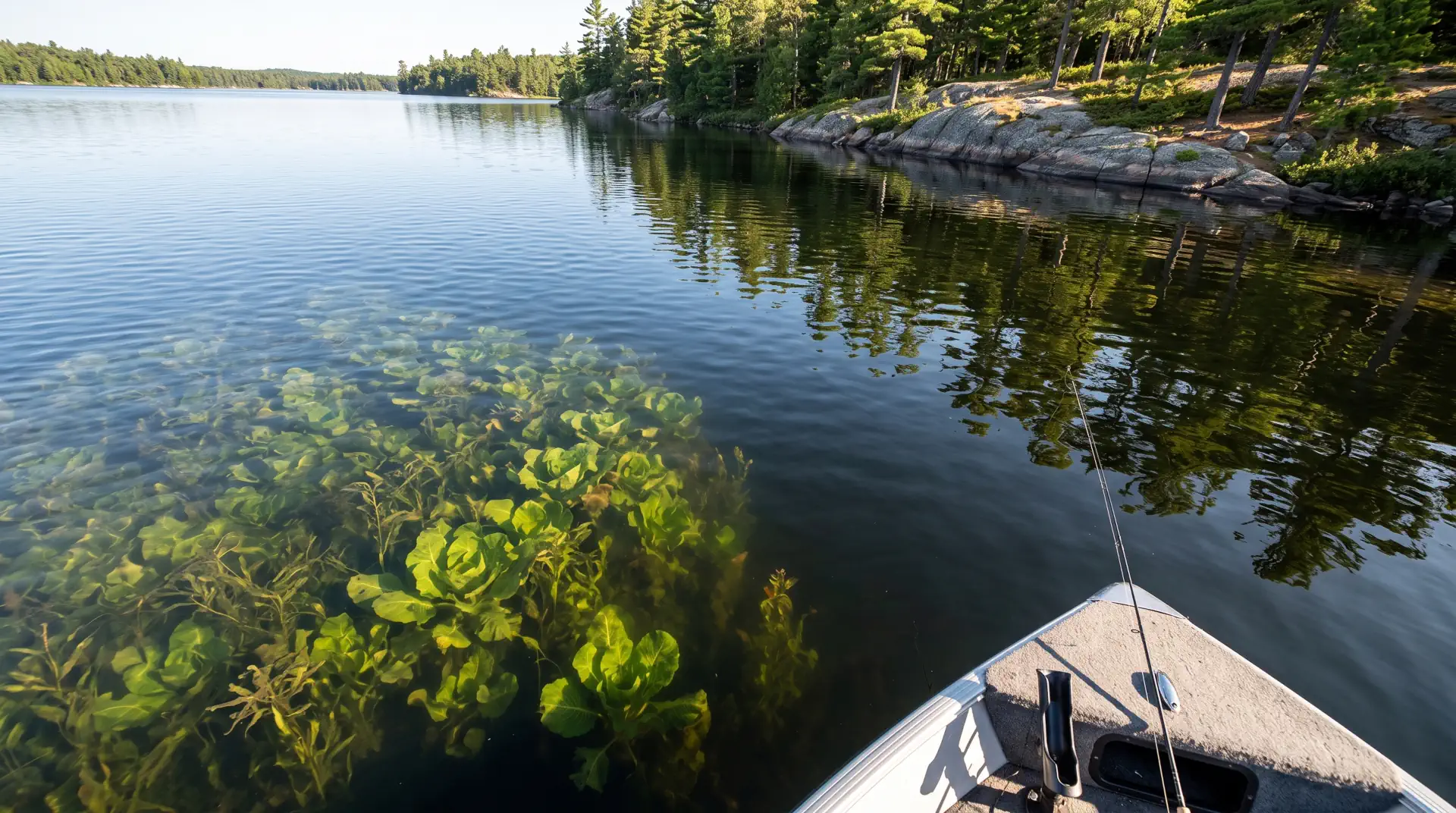
Northern pike fishing pairs heavy-action casting tackle, tooth-proof terminal rigging, and erratic lure presentations to trigger predatory strikes across shallow weed beds, rock shelves, and river neck-downs. In premier fly-in fisheries like Manitoba's Cobham River system, anglers cast heavy spoons, suspending jerkbaits, or large inline bucktails over submerged cabbage in water temperatures between 50°F and 68°F to hook trophy pike measuring 40 to 50+ inches.
Anatomy of an Ambush: Reading the Pike's True Kitchen
Water temperature and aquatic vegetation dictate where monster pike position across the Cobham River system. Pike are classic ambush feeders, tucking into thick cover with eyes turned upward. Select a temperature band below to see how trophy fish position and how Cobham guides target them.
Terminal Rigging: The Heavy-Action Gear Blueprint
Standard bass gear will buckle against a 40-inch Manitoba giant. Pike jaws are packed with sharp, inward-raking teeth. Every knot, line, and snap must hold up when driving trebles home and keeping fish out of dense cabbage. Click each tackle element below for calibration rules.
Lure Selection & Retrieval Cadence: The Strike Triggers
Monster pike conserve energy for high-probability prey. Straight, robotic retrieves rarely convince a 45-inch female. Use erratic cadences paired with deliberate dead stops. Test the three core triggers below.
Heavy Metallic Spoons
Traditional copper, brass, and red-and-white patterns remain lethal. Ripping the spoon hard creates intense flash, followed by a wobble flutter on controlled slack.
Suspending Jerkbaits
Neutral-buoyancy minnows hovering right at eye level. Exceptional in chilly spring or post-cold-front conditions when pike need time to stalk their meal.
Inline Bucktails
Pushes maximum water to alert the pike's lateral line. When cabbage grows near the surface, burning a bucktail across the canopy sparks reactionary attacks.
Water Temperature, Depth & Lure Efficiency Modeling
Comparative field models showing seasonal depth transitions, predatory activity windows, and presentation efficiency across different aquatic vegetation types.
Depth & Aggression vs. Water Temp
Model 1Feeding aggression reaches its peak between 55°F and 65°F inside fresh cabbage before fish shift toward deeper channels during summer highs.
Lure Efficiency by Cover Type
Model 2Vibrant green cabbage generates high dissolved oxygen and peak lure efficiency, while dying brown vegetation pushes trophy pike to outer edges.
The Catch-and-Release Protocol: Safeguarding Trophy Genetics
In cold Canadian Shield waters, a northern pike takes 12 to 20 years to reach the 40-plus-inch mark. Cobham River Lodge has preserved its trophy fishery through four decades of mandatory 100% catch-and-release. Review our handling steps and use the interactive growth calculator below.
Rubber Cradle Nets Only
Never hoist heavy pike in coarse nylon mesh. Soft rubber cradle nets let the fish rest in the water along the Lund boat gunwale while release tools are prepared.
Horizontal Belly Support
Never lift large pike vertically by the lower jaw. Vertical holds strain internal organs and damage gill arches. Always cradle the fish horizontally with wet hands.
Barbless Hooks & Cutters
Crimp barbs flat before casting. Keep 10-inch release pliers and mini bolt-cutters on hand to snip buried hook shanks rather than tearing delicate jaw cartilage.
Trophy Pike Age & Growth Estimator
Slide the length measurement to estimate the weight, biological age, and yearly spawning capacity of a Manitoba trophy female pike.