

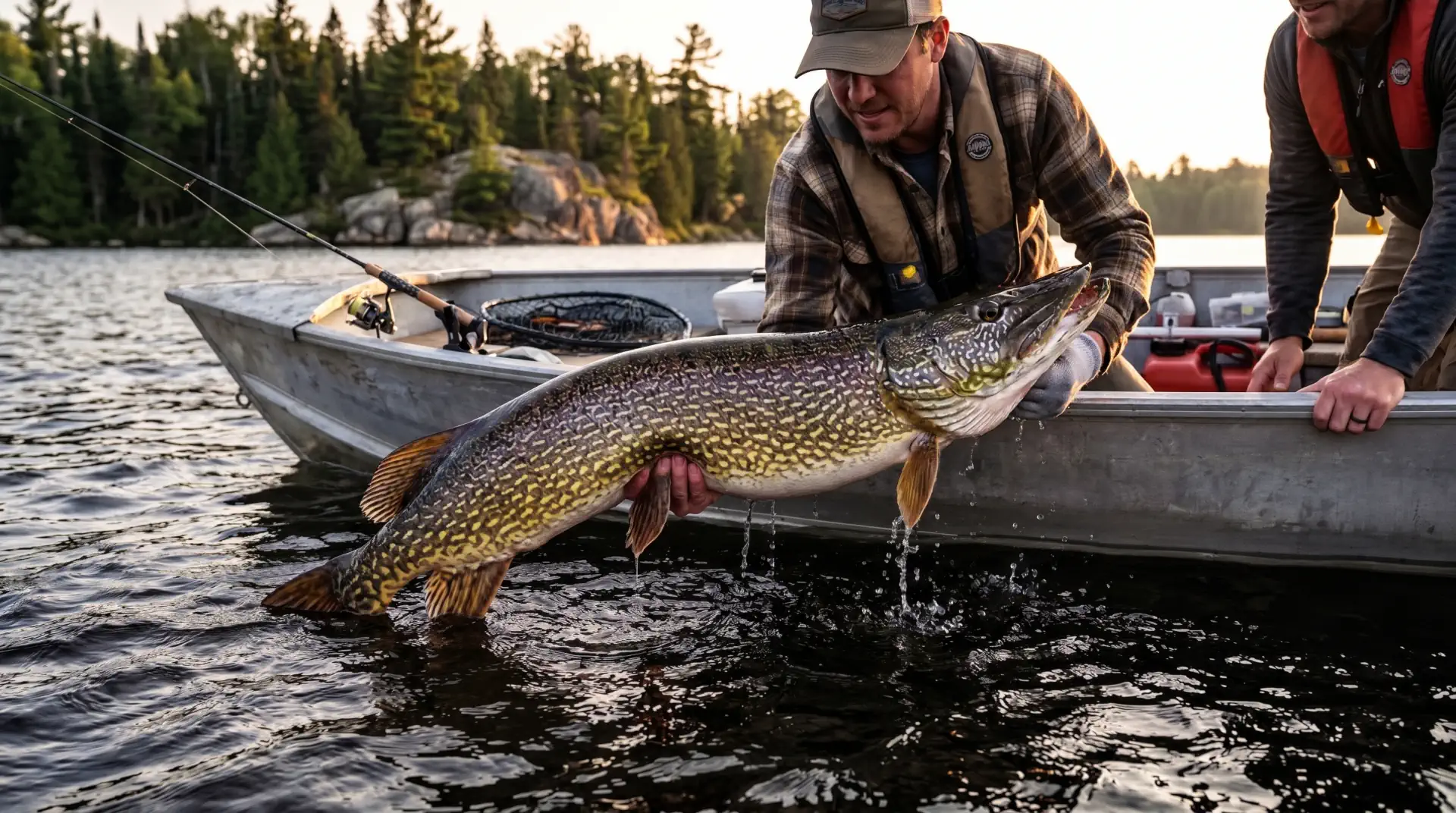
Quick Answer: How to Catch More Northern Pike
Target Northern Pike by working heavy weed edges, windblown bays, and drop-offs using heavy-action tackle. Run a 50–65 lb braided mainline connected to an 80 lb fluorocarbon or titanium wire leader to prevent bite-offs. Retrieve erratic spoons, inline spinners, or large glide baits with aggressive pauses, and always execute a boat-side figure-8 to convert trailing fish.
Interactive Rigging & Terminal Tackle Configurator
Select your water conditions and target environment below to generate the ideal rod, reel, line, leader, and terminal connection tailored for heavy predators.
1. Select Water Environment
2. Recommended Tackle Specification
Stained Water SetupStiff backbone to drive hooks through cartilage and pull fish out of cabbage.
Sealed carbon drag system set to 15+ lbs of stopping power.
Cuts clean through heavy stalks of milfoil and transmits subtle ticks.
High abrasion resistance with stealth presentation in tannic water.
Terminal Connection Architecture
Seasonal Depth Migration & Habitat Anatomy
Understanding seasonal surface water temperatures and habitat transitions allows anglers to systematically target the top 10% of productive wilderness lake structure.
Pike Depth vs. Water Temperature Profile
Observe how warming summer temperatures force apex fish into deeper cabbage margins.
Spring Shallow Bays
50°F - 58°FPost-spawn predators soak up heat in dark-bottomed backwater bays (3-6 ft deep) hunting emerging broadleaf vegetation.
Summer Deep Edges
68°F - 74°FBig females slide outward to outer cabbage weedlines and main-lake rock humps in 10-18 ft of water near the cold thermocline.
Fall Current Necks
48°F - 56°FAs weeds die off in September, big pike stage in river mouths and bottleneck channels where ciscoes and whitefish migrate to spawn.
Lure Selection & Presentation Conversion Matrix
Pike rarely chase a straight, predictable lure. Explore how adding pauses, flutter drops, and color contrast dramatically raises strike conversion rates.
Strike Conversion Rate by Presentation Style
Data based on guide logs comparing follower conversions across retrieve cadences.
High-Producing Lure Categories
Cast beyond cabbage pockets. Burn 4 turns, lift rod high, and kill the retrieve completely for 2 full seconds. 80% of strikes occur on the flutter drop.
Burn tandem-blade bucktails fast just under the surface to generate high vibration when wind chop breaks up overhead sunlight.
Sweep 8-to-10-inch suspending plugs with aggressive twitches, letting the bait hang motionless in clear water pockets.
Interactive Figure-8 Maneuver Simulator
When a giant Northern tracks your lure right to the gunwale, pulling the bait out of the water ruins the catch. Step through the guide-tested figure-8 routine to force a reaction strike.
Step 1: Spotting the Follower
Maintain cadence & never freezeYou reel your lure to within 2 feet of the boat and spot a 40-inch shadow floating six inches behind your leader with flared gills. Do not lift your lure out of the water! Freeze your body, keep your rod tip low, and prepare to transition instantly into a boat-side turn.
Conservation & Safe Fish Handling
Protecting 20-year-old trophy females for future wilderness generations.
- 1. Rubber-Coated Cradle Net: Prevents split fins and protects the fish's vital protective slime coat.
- 2. 11-Inch Long Needle-Nose Pliers: Keeps your hands safely away from razor-sharp teeth and gills.
- 3. Heavy-Duty Mini Bolt Cutters: Clip deep treble hook shanks immediately rather than tearing delicate internal throat tissue.
- 4. Horizontal Support & Revival: Never hold large pike vertically by the jaw. Cradle the belly horizontally in cold water until she kicks off under her own power.
Frequently Asked Questions
Click a question below to view details. Opening one answer closes any open item.