

What is the absolute best bait for ice fishing northern pike?
The most effective ice fishing pike bait balances natural scent and predator profile: large dead ciscoes (8–10 inches) and oily saltwater herring rigged on quick-strike wire harnesses dominate late-winter trophy catches, while vigorous 4–6 inch live white suckers and golden shiners excel in early ice around shallow green vegetation.
Interactive Hardwater Bait Recommendation Engine
Northern pike adjust their metabolism and hunting behavior dramatically as ice deepens and water temperatures hover near freezing. Select your field conditions below to receive custom recommendations for bait selection, terminal tackle, and presentation depth tailored for Canadian Shield waters.
8–10 Inch Fresh Dead Cisco
Tactical Execution & Preparation:
Puncture the swim bladder behind the pectoral fins with two pocketknife stabs. Submerge in the hole and squeeze firmly under water to expel air bubbles. Hang bait horizontally on a tandem wire quick-strike rig suspended 12 to 18 inches above bottom.
Bait Efficiency & Attribute Matrix
Analyzing field results across northern waters reveals clear trade-offs between live energetic triggers and high-oil scent generators. Review the quantitative performance comparisons below to refine your hardwater strategy.
Seasonal Efficiency Index
Relative strike frequency across winter ice phases (100 Point Scale)
Key Trend: Live baits dominate early ice in shallow cabbage, but dead baits skyrocket in effectiveness as late-season pre-spawn cows shift to scavenging.
Bait Attribute Comparison
Multi-factor evaluation: Scent, Flash, Durability, & Trophy Selectivity
Key Trend: Dead Cisco and Atlantic Herring maximize scent dispersal and selective trophy strikes, while White Suckers lead in cold-water durability and vibration.
Quick-Strike Harness Builder & Air Deflation Studio
Tooth contact on bare fluorocarbon leads to lost trophies. Master the construction of 30-lb titanium quick-strike harnesses and the critical swim bladder "burping" technique required to keep dead bait hanging horizontally without unnatural buoyancy.
30-lb Titanium Tandem Treble Harness
Built with an 18-inch leader of 30-lb multi-strand titanium or tieable stainless wire (Surflon) connected to heavy vinyl-coated Dacron mainline via a #4 barrel swivel. Double #4 Gamakatsu trebles ensure immediate jaw hooksets without delay.
- 1 #4 Heavy Barrel Swivel: Connects mainline to wire leader.
- 2 Front Treble (#4 Round Bend): Pinned lightly beneath the dorsal fin.
- 3 Rear Treble (#4 Round Bend): Embedded near the tail base (2.5–3" spacing).
Tandem trebles permit an instantaneous hookset the moment your flag releases.
Transition Zones & Thermal Hole Craft
Direct sunlight blazing through an uninsulated hole casts an unnatural spotlight down to shallow structure, spooking trophy fish holding beneath the ice ceiling. Deploy round thermal tip-up bases along key transition shelves.
Hardwater Depth Zone Explorer
First Transition Breakline (12–18 Feet)
Tactical Setup:
Position tip-ups right where shallow weed flats dump into deeper water. Suspend dead bait 12 to 18 inches above the bottom. Thermal round bases are essential to block light penetration and prevent hole freeze-up in sub-zero winds.
Conservation & Landing Protocol:
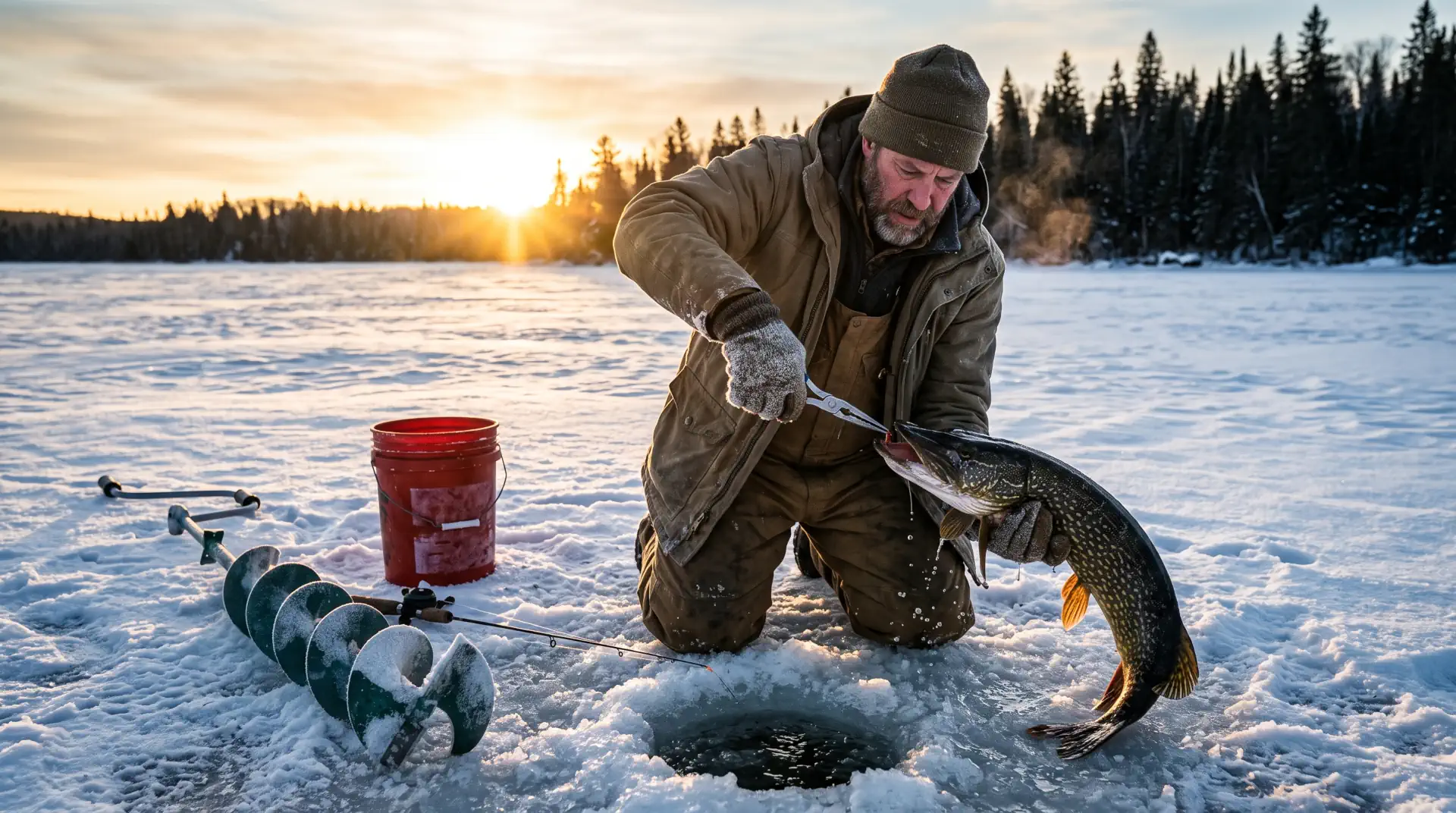
Set hooks immediately upon flag trip to land hooks in the jaw scissor. Keep long-nosed pliers, wire cutters, and jaw spreaders on a dry tray. Hold fish horizontally for quick photos before immediate release.
Frequently Asked Hardwater Questions
Explore expert guide answers regarding bait selection, hole management, rigging preservation, and trophy live-release tactics. Click any question to expand.