Fishing News

Best Fishing Rods for Northern Pike: Lodge Guide Tackle Pick

2026-05-06

A forty-five-inch northern pike doesn't nibble—she detonates your lure and heads straight for the cabbage. Discover our guide-tested breakdown of the best fishing rods for northern pike, from ideal blank power and action to field-proven baitcasting setups built for Canadian shield waters.

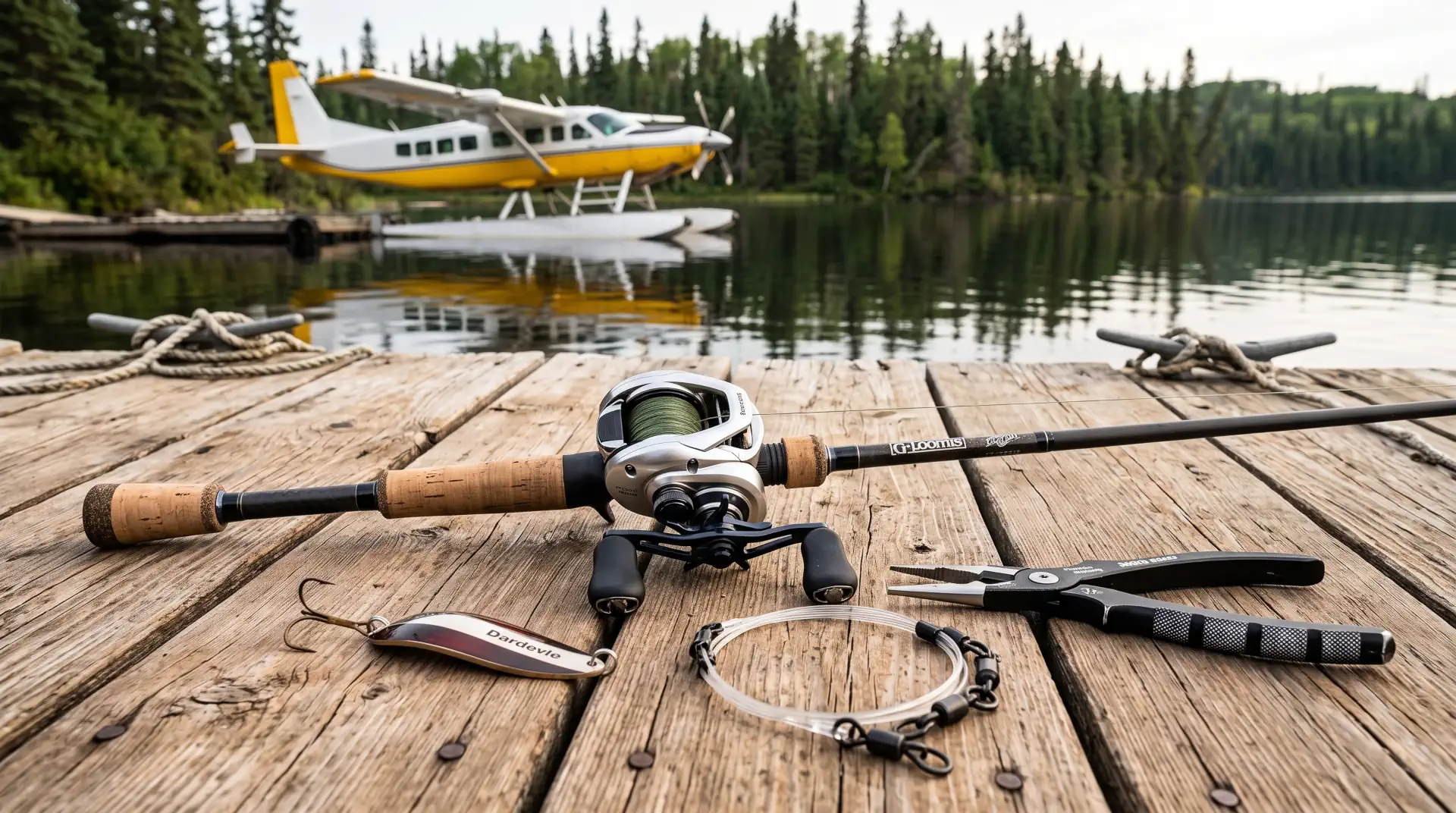
Heavy baitcasting rod, brass spoon, and 80 lb bite leader flat-lay on a Canadian dock beside a floatplane

Share this post

#All Posts

Best Fishing Rods for Northern Pike: Field-Tested Buying Guide

Stop bringing toothpicks to a gunfight. A forty-five-inch Northern Pike requires heavy lifting muscle, instant tip recovery, and the structural backbone to drive thick hooks through armor-plated jaws.

Quick Answer / Key Takeaway

The best fishing rods for northern pike are 7'0" to 7'6" medium-heavy to heavy power baitcasting rods with a fast action, rated for 1/2 to 2-ounce lures. This setup provides the lifting leverage needed to turn trophy fish away from heavy cabbage while preserving the casting distance required to search vast weed flats.

7'0" – 7'6"
Ideal Length
MH / Heavy
Power Rating
Fast
Blank Action
50–65 lb
Braided Line Match
Interactive Recommendation Engine

Field-Tested Rod Models & Selector

At Cobham River Lodge, we see hundreds of setups tackle remote Canadian shield waters every season. Filter our battle-tested recommendations below by lure preference, budget tier, or power requirements to find your ideal match.

Filter By:
Mechanical Physics

Power vs. Action: The Deflection Simulator

Conflating blank power with action is an expensive mistake when eighty miles into the bush. Power measures raw lifting resistance, while Action determines where the rod flexes under pressure.

Toggle the load simulator below to see why a Fast-Action Medium-Heavy blank delivers the immediate hook-setting energy required to drive barb wire through dental armor.

Light Stress Trophy Pull
Medium Pressure (Standard Hookset)
MH / Fast Action (Recommended Standard)
Heavy / Extra-Fast (Big Rubber & Bucktails)
Medium / Moderate (Finesse or Parabolic Walleye Rod)

Deflection Profile: Horizontal axis represents rod length (0 = Handle, 100 = Rod Tip). Vertical axis represents downward deflection under load.

Lodge Rigging Logic

Interactive Lure & Line Pairing Calculator

Select your target lure weight and habitat cover below. Our guide calculator instantly outputs the recommended rod blank power, line test, leader material, and reel pairing to prevent tackle failure on the water.

* Note: All recommended setups assume barbless hooks for ethical fish handling.
Recommended Setup Trophy Ready
Rod Specification
7'2" Medium-Heavy Fast
Mainline Braid
50 lb Superline Braid
Bite Leader
80 lb Fluorocarbon Leader
Optimal Reel Type
300-Size Baitcaster
Guide Insight: This combination allows long casts across vast cabbage beds while providing enough backbone to wrench heavy fish out of tangles before she strips your gears.
Tackle Comparison

Casting vs. Spinning: Choosing Your Weapon

While spinning setups handle crosswinds and light lures with ease, heavy baitcasting gear remains king on Canadian shield waters for raw torque, thumb control, and thick braid management.

Performance Radar Comparison

Baitcasting Setup (Primary Choice)

Heavy Hardware
  • Thumb-Drag Pinpoint Precision: Feather your lure mid-flight to land silently in cabbage pockets.
  • Direct Winch Power: Heavy brass gears and direct spool drive horse 30lb fish out of timber.
  • Heavy Braid Management: 50–65lb braid flows smoothly without wind knots or bail-spring fatigue.

Spinning Setup (Tactical Alternative)

Cold Fronts / Wind
  • Zero Backlash in Crosswinds: Perfect for slinging lures into howling northern winds.
  • Finesse Lure Presentation: Ideal for unweighted soft jerkbaits when cold fronts push fish belly-down.
  • Recommended Pairing: 3000–4000 series reel on a 7'0" Medium-Heavy rod.
Expert Advice

Common Questions About Northern Pike Rods

Direct answers from our experienced lodge guides on fly-in logistics, rod survival, and tackling trophy Canadian pike.

You can land incidental smaller pike on a medium walleye setup, but you risk snapping the blank or burning out your drag when a forty-plus-inch fish burrows into cabbage. Light gear also dangerously prolongs the fight time, building up lethal lactic acid levels and making a safe, healthy catch-and-release much harder.
A 7'2" to 7'6" rod offers the best sweet spot. It provides sweeping casting distance across open cabbage flats while remaining manageable when boat-side netting fish alongside your boat partner. Anything over eight feet becomes clunky in 16–18 foot lodge skiffs and difficult to pack into floatplane rod tubes.
One-piece rods offer unbroken blank taper, superior backbone, and maximum sensitivity. However, always confirm your air charter's rod tube length restrictions. Premium multi-piece predator rods with reinforced spigot ferrules now deliver almost indistinguishable power without risk of flight baggage denial.
Choose rods featuring double-foot guides with zirconium or silicon carbide (SiC) inserts that withstand continuous friction from 50–65 lb braid. Before hitting the water, always run a cotton swab through each guide ring. If fibers catch, you have a hairline ceramic fracture that will shear your line on a hookset.
80–100 lb fluorocarbon is our lodge standard for clear shallow bays because it remains virtually invisible and provides great lure wobble on unweighted baits. However, in sharp Canadian shield granite or for high-speed burning bucktails, multi-strand titanium wire leader provides kink-free bite security.