

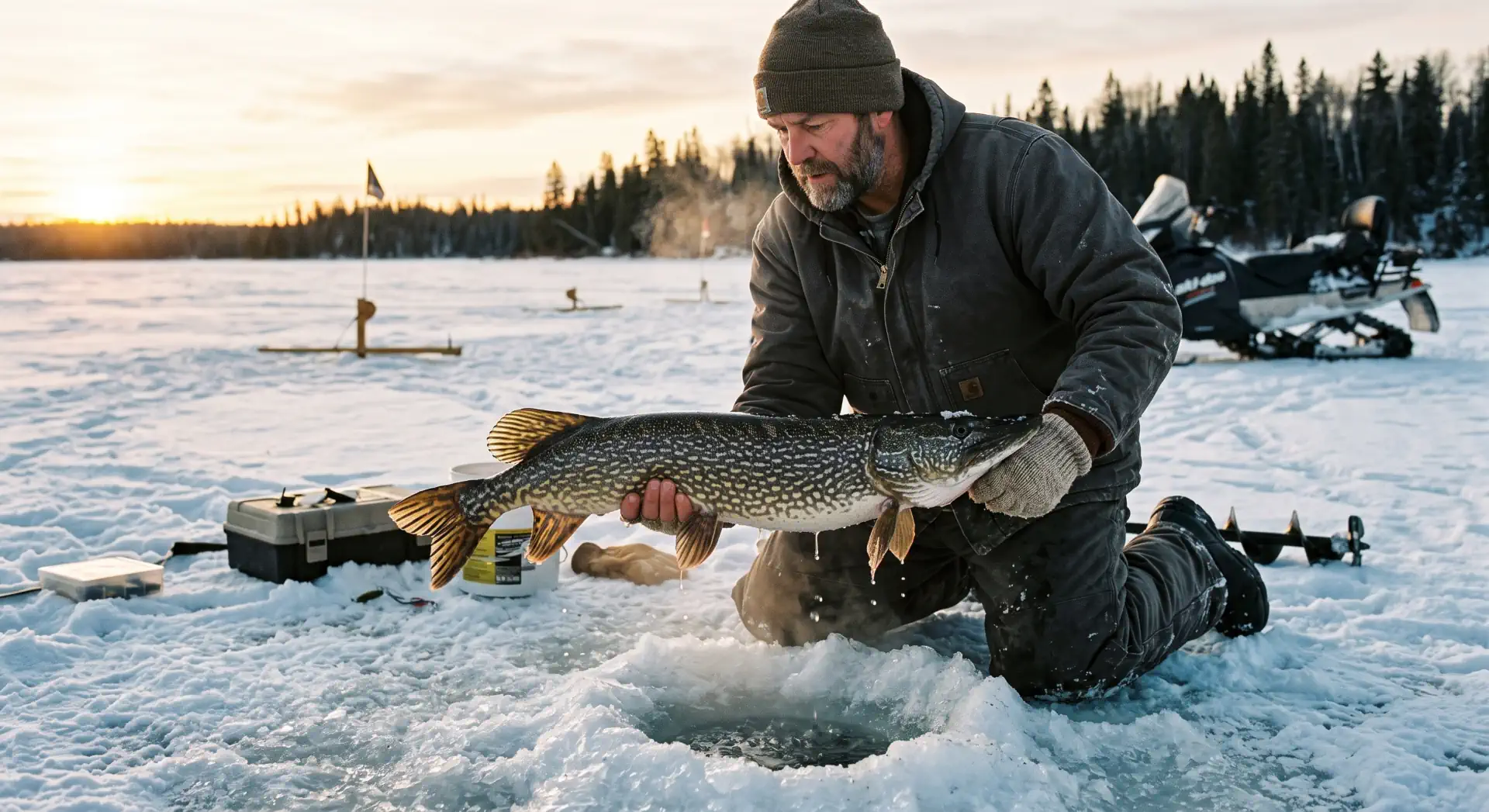
Mastering Northern Pike Ice Fishing
To consistently land trophy northern pike through the ice, suspend large, oily deadbait (such as thawed cisco or smelt) horizontally beneath a thermal tip-up using a dual-treble quick-strike rig. Target lingering green cabbage flats in early winter (3–10 ft), migrating to deep basin transition drop-offs (15–25 ft) in mid-winter, before patrolling shallow tributary mouths (4–8 ft) during late-ice pre-spawn. Always drill 10-inch holes to prevent broad-shouldered trophy females from wedging on the ice shelf.
Reading the Frozen Lake: Three Winter Phases
Northern pike shift depths significantly across the winter season based on weed decay and oxygen depletion. Select a phase below to inspect the target depth corridor and biological behavior.
Target Depth Profile Across Winter (Ft Below Ice)
Inverted Depth ViewWhy Trophy Pike Prefer Oily Dead Cisco
In 34°F water, trophy females become strict energy economists. Chasing active baitfish requires heavy calorie burn. A dead cisco hanging motionless represents pure, effortless caloric gain.
Caloric Economy Index in Near-Freezing Water
Energy Expended Chasing vs Calorie Reward Acquired
Deadbait Rigging Protocol
Slow Cold-Water Thaw
Always thaw baits slowly in lake water on the ice. Fast microwave thawing breaks down skin and causes hooks to rip free.
Flank Scent Slicing
Make 2–3 shallow knife cuts across each flank to release natural fish oil plumes into current lanes.
Horizontal Neutral Balance
Anchor one treble near the dorsal and the second treble behind the head so the deadbait suspends perfectly level in the water column.
High Silhouette Suspension
Hang the bait 12–24 inches above the weed tops or bottom silt. Pike look upward to hunt; never let deadbait settle on the mud.
Hole Clearance Simulator: 8" vs 10" Auger
A heavy 40-inch+ northern pike has a head and dorsal shoulder span exceeding 7 inches. An 8-inch hole provides virtually zero margin of error when turning a green fish into the ice column.
Ice Column Clearance Simulator
40" Trophy Female (7.2" Body Width)Showing 10" Hole: Ample clearance for a 40"+ pike's head and shoulder entry.
Quick-Strike Rig Specifications
Zero memory coils on snowpack; easy hand-over-hand pulling without cutting freezing fingers.
100% kink-proof against razor-sharp gill rakers and dental pads unlike standard stainless wire.
Quick penetration in hard bony jaw cartilage with rapid, damage-free unhooking at the ice surface.
Sub-Zero Handling & Exposure Limit Calculator
In below-zero windchill, a trophy pike's gill filaments and delicate corneas can suffer irreversible tissue freezing in under 20 seconds. Calculate safe exposure windows based on your conditions:
Windchill Exposure Calculator
Safe Catch & Release Checklist
Unhook in the Hole Column
Keep the fish's head submerged in the hole while backing barbless trebles out using long-reach aluminum pliers.
Wet Wool Support (Never Bare Hands)
Dip wool gloves in water before handling to preserve protective slime coat. Always support heavy females horizontally.
Tail-Hold Upright Release
Support the fish upright inside the hole until equilibrium returns and she kicks away on her own power.
Interactive Ice Trip Planner
Customize your outing parameters to receive an instant tactical blueprint for spread depth, hole positioning, and terminal tackle.
Custom Tactical Blueprint
Frequently Asked Questions
Target 3 to 10 feet over standing green cabbage weedbeds during early ice. Shift deeper to 15 to 25 feet off main-lake drop-offs and rocky saddles during mid-winter, then return to shallow creek mouths in 4 to 8 feet during late ice pre-spawn staging.
Dead oily baits like thawed cisco, herring, or smelt disburse a continuous scent plume into underwater currents and represent an effortless meal for cold-sluggish predators. In 34°F water, trophy pike routinely scavenge dead forage rather than expend valuable calories chasing erratic live bait.
A 10-inch auger provides the indispensable clearance required for the 7+ inch shoulder width of a 40"+ trophy pike. Standard 8-inch holes offer practically zero margin of error, frequently causing green, head-shaking fish to catch their gill plates on the lower ice shelf and snap terminal leaders.
With a dual-treble quick-strike rig, set the hook within 5 to 10 seconds of steady spool rotation. Never wait for a second prolonged run; quick sets consistently drive hooks into hard jaw cartilage while completely eliminating deep, lethal gut-hooking.
Back barbless trebles out using long pliers while the fish's head remains submerged in the ice hole column. If lifting for a photo, wet wool gloves first, support the fish horizontally, and limit total air exposure to under 15 seconds to prevent irreversible corneal and gill filament freezing.