

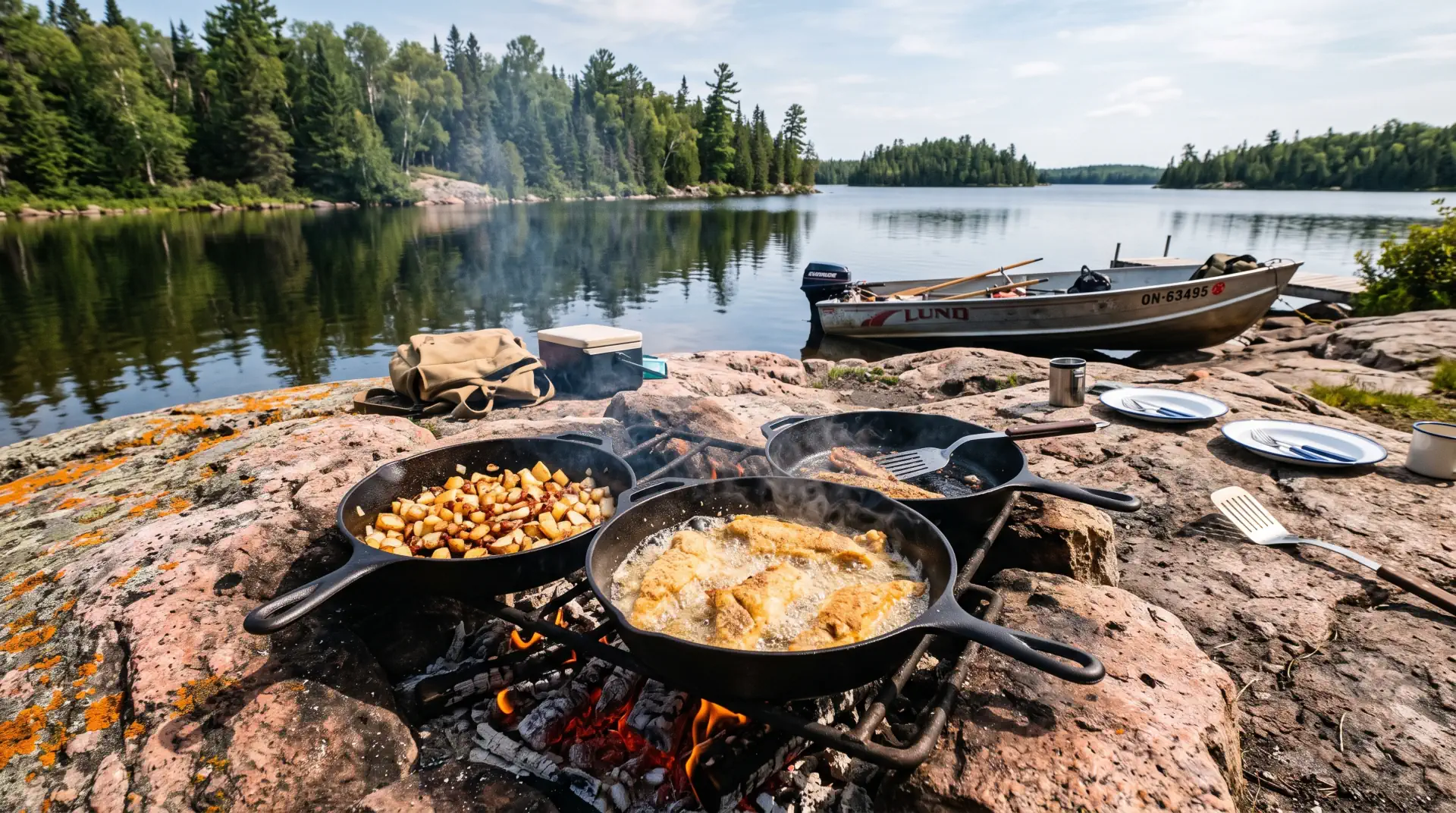
The Sacred Midday Intermission: Canadian Walleye Shore Lunch
Quick Answer Definition
A traditional Canadian walleye shore lunch is an open-fire wilderness meal prepared on remote lake points during a fishing expedition. Guides fry freshly caught, cold-water walleye fillets in seasoned cast-iron skillets over roaring hardwood embers, serving them piping hot alongside crispy diced potatoes, caramelized onions, and simmering camp beans.
Six hours of wrestling heavy Manitoba predators in cold water creates a deep hunger no boxed sandwich can satisfy. Step onto prehistoric pink granite, hear the dry jack pine crackle, and experience the ultimate wilderness dining tradition.
1. Selective Harvest: Why 16 Inches Rules the Grate
Sustainable catch-and-cook requires protecting big breeding females. Larger walleyes carry the future of the fishery while smaller "eaters" yield sweet, firm meat with zero grease. Use the interactive sizer below to see how walleye length affects table quality versus conservation impact.
Golden Eater Walleye (Optimal Choice)
14 to 17-inch walleyes offer sweet, flakey white meat with clean grain and zero fat buildup. Perfect candidate for the skillet!
2. The Guide's Cut: "Zipping" the Fillet
Amateurs ruin walleye by leaving the mud vein and pin bones intact. Guides "zip" the fillet—stripping out the dark lateral line to produce two boneless, pure white strips per side that fry into unmatched crispy perfection.
Clean Fillet Preparation
Skin the walleye side completely and lay the boneless slab flat on an aged spruce plank. Ensure your blade is razor-sharp.
3. The Three-Skillet Ballet & Firecraft Simulator
Timing is everything on the Canadian Shield. A rookie serves cold spuds with lukewarm fish; a seasoned master runs a three-pan symphony so every dish hits the wood scorching hot at Minute 25. Scrub the timer below to watch the choreography unfold.
1. Russet Potatoes
ACTIVE SIZZLELid off. Searing bottom layer to build an amber, shattered crust with yellow onions and garlic salt.
2. Camp Baked Beans
SLOW SIMMERPlaced offset on cooler coals near rock border. Molasses, bacon, and splash of black coffee bubbling slowly.
3. Walleye Flash Fry
PREHEATING OILBringing 2 inches of canola oil up to 375°F over intense hardwood coals. Fish rests in dredge mix.
Drop a matchstick head or pinch of cornmeal into the skillet oil to verify heat:
4. Cobham Dredge & Shore Lunch Recipe Calculator
Scale the guide-tested Shore Lunch dredge and side ingredients automatically based on your group size. Simplicity wins on the river—equal parts cornmeal and flour with crushed Saltines create structural crunch.
Lemon pepper, garlic salt, sweet paprika, and crushed celery seed mixed directly into dry dredge.
Scaled Shore Lunch Ingredients
Fresh Catch: 4.0 lbs Fillets| Item | Quantity | Purpose |
|---|
Common Questions About Walleye Shore Lunch
What is the best oil for an open-fire walleye shore lunch? ▾
High-smoke-point oils like canola, peanut, or pure lard perform best over campfire cast iron. Avoid extra virgin olive oil or standard butter for the fish fry, as their low smoke points will burn and impart bitter flavors at 375°F.
How do you keep walleye batter crispy and prevent sogginess? ▾
Always pat raw fillets completely dry with paper towels before dipping them in egg wash or dredge. Maintain frying oil at 350°F–375°F, fry in small batches to prevent oil cooling, and never stack hot fillets on top of one another.
What are the traditional side dishes served with a Canadian shore lunch? ▾
Classic shore lunches feature fried skin-on russet potatoes with caramelized yellow onions, slow-simmered camp baked beans with bacon, fresh-sliced lemons, tartar sauce, and canned sweet corn or buttered rye bread.
Why do guides avoid cooking large walleyes for shore lunch? ▾
Walleyes between 14 and 17 inches offer the tenderest, sweetest meat and lowest fat contamination. Larger fish over 20 inches serve as primary breeding stock for the lake's ecosystem and possess coarser, tougher meat.